M27 — The Dumbbell Nebula
A dying star, 1,360 light years away
 Eva (ZWO Seestar S50 Pro)
What you're looking at
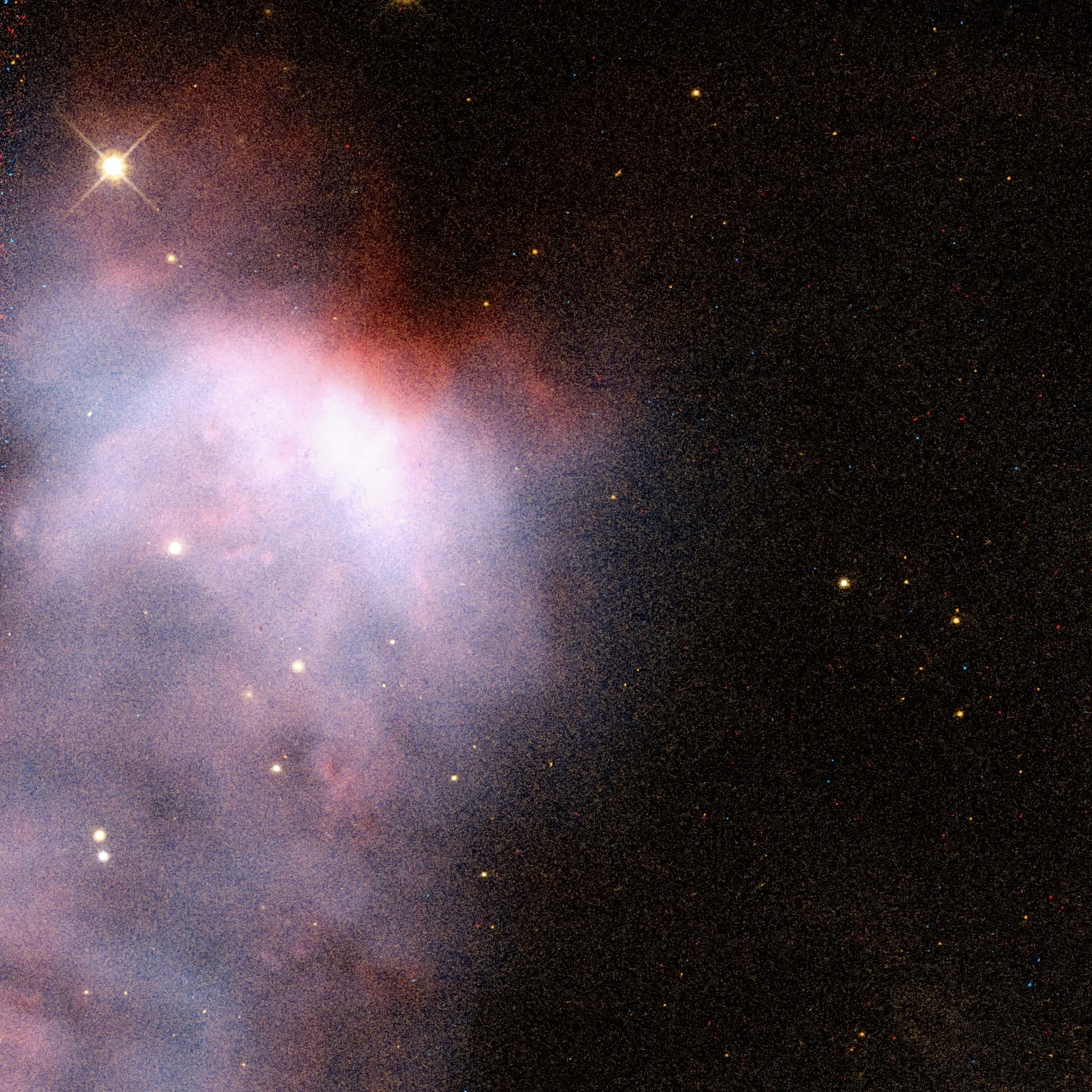
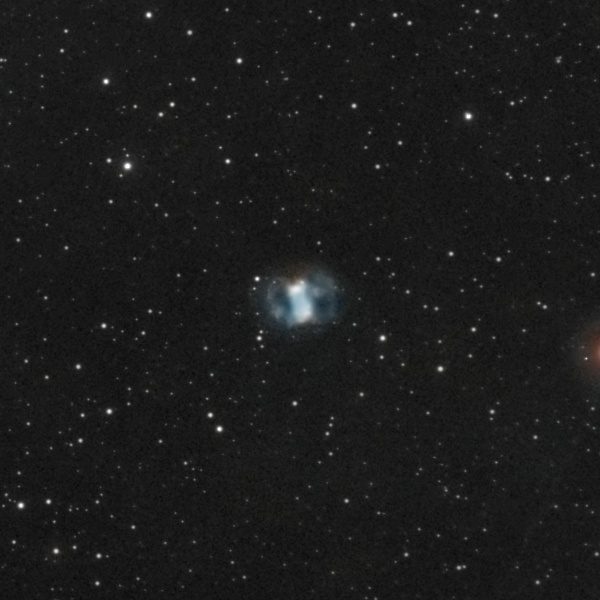
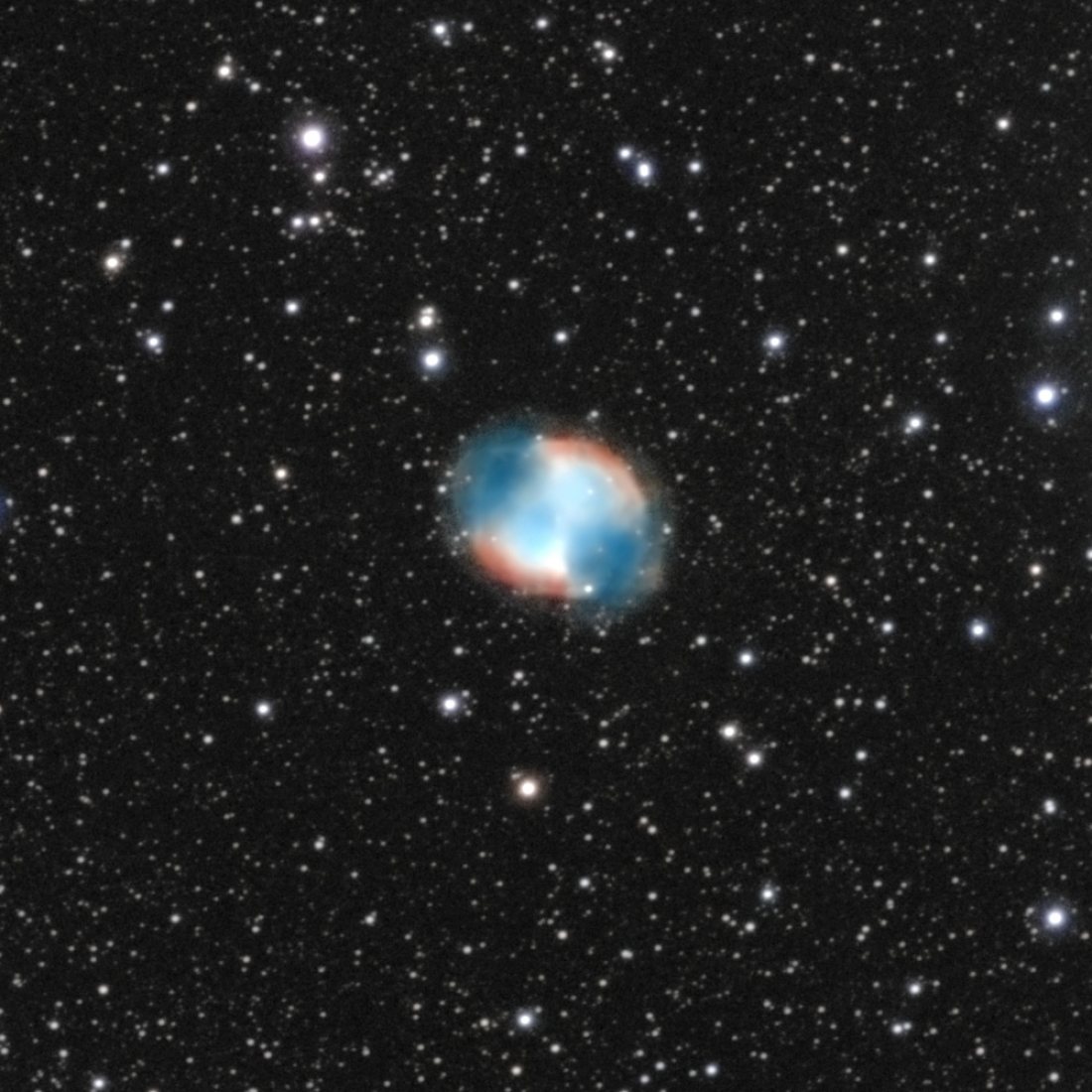
M27 is one of the brightest planetary nebulae in the sky — about 1,360 light years away in the small constellation Vulpecula. Despite the name, planetary nebulae have nothing to do with planets. They're what a Sun-like star looks like when it dies.
Roughly 9,800 years ago, a star much like our own ran out of hydrogen, swelled into a red giant, and then shed its outer layers into space. What remains at the center of the Dumbbell is the dead core of that star — a white dwarf, slowly cooling, no longer fusing anything. The bright pink and cyan gas around it is the dispersing atmosphere of the original star, glowing because the white dwarf's ultraviolet radiation still excites it.
In another 10,000 years or so, the gas will dissipate completely and only the white dwarf will remain. M27 is, quite literally, a 10,000-year window into a star's death — most of which has already passed.
The lesson
Stars that look like this don't explode. They drift apart.
The Sun will do exactly what the M27 progenitor did — about 5 billion years from now. It'll swell, shed its layers, leave behind a slowly cooling core. No supernova, no drama. Just the gradual loosening of structure until nothing's left holding it together.
Most things end this way. Worth remembering when planning long arcs.
One photo. One lesson.
New entries land when the sky cooperates. Get them by email, plus the Sitreps jobs newsletter — no schedule, no spam. Unsubscribe from either one anytime.
Object data
- Catalog
- M27 · NGC 6853
- Constellation
- Vulpecula
- Type
- Planetary nebula
- Distance
- ~1,360 light-years
- Diameter
- ~3 light-years
- Age
- ~9,800 years (since shed)
- Central object
- White dwarf (former Sun-like star)
- Discovery
- 1764 · Charles Messier (first planetary nebula ever catalogued)