M51 — The Whirlpool Galaxy
A merger in progress, 23 million light years away
What you're looking at
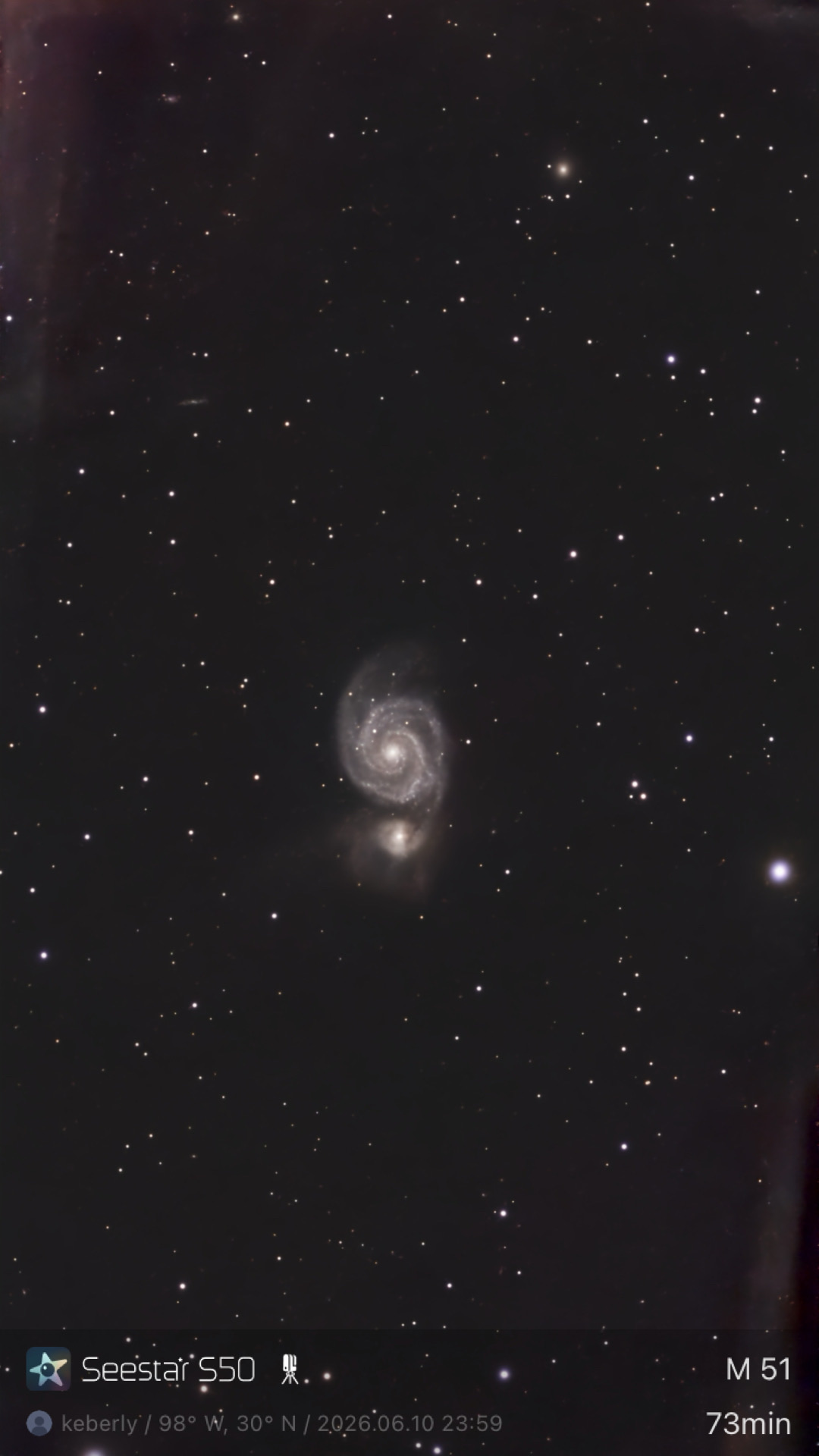
M51 is a face-on spiral galaxy in the constellation Ursa Major, about 23 million light years from Earth. It was the first galaxy ever identified as having a spiral structure — Lord Rosse documented the arms in 1845 using a 72-inch reflector in Ireland called the Leviathan of Parsonstown. You're looking at roughly 100 billion stars.
The smaller object directly below M51's core is NGC 5195, a dwarf galaxy that's been spiraling into M51 for hundreds of millions of years. The two are mid-merger. NGC 5195 is being torn apart — its stars flowing into M51, its gas feeding new star formation in the spiral arms. In a few hundred million years, NGC 5195 won't exist as a separate galaxy anymore.
The faint smudge in the upper left of the frame is a separate background galaxy, NGC 5198, about 80 million light years behind M51.
The lesson
Veteran transition is usually framed as “leaving one career to start another.” Two separate things. One ends, one begins.
That framing is wrong.
What actually happens: the military career gets absorbed into whatever you build next. The discipline, the leadership reps, the comfort with uncertainty, the network, the way you think about mission and teams — none of it disappears. It flows in. The next career becomes structurally richer than it could have been if you'd started from zero.
The career isn't ending. It's becoming part of a bigger orbit.
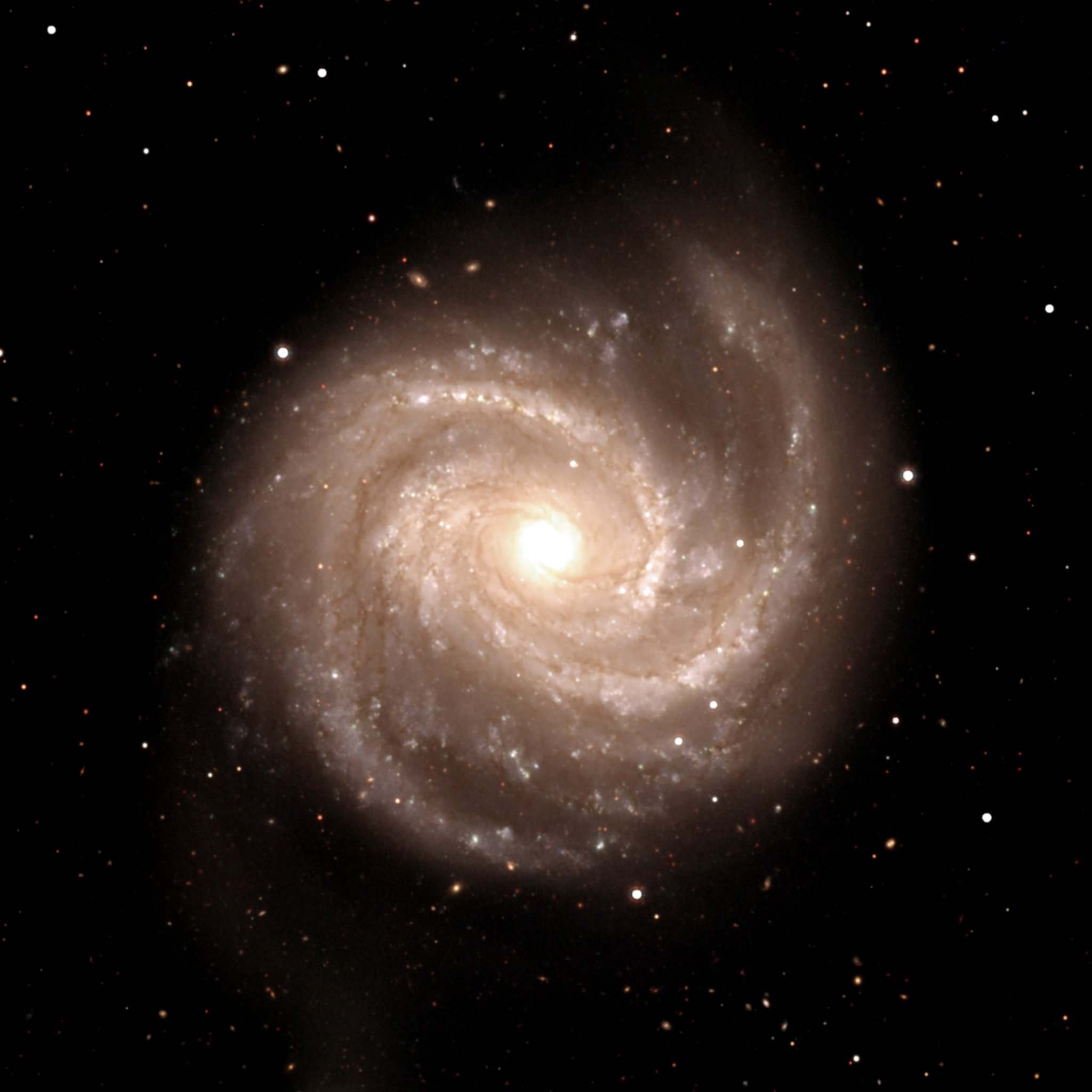
Same object, from a professional survey telescope
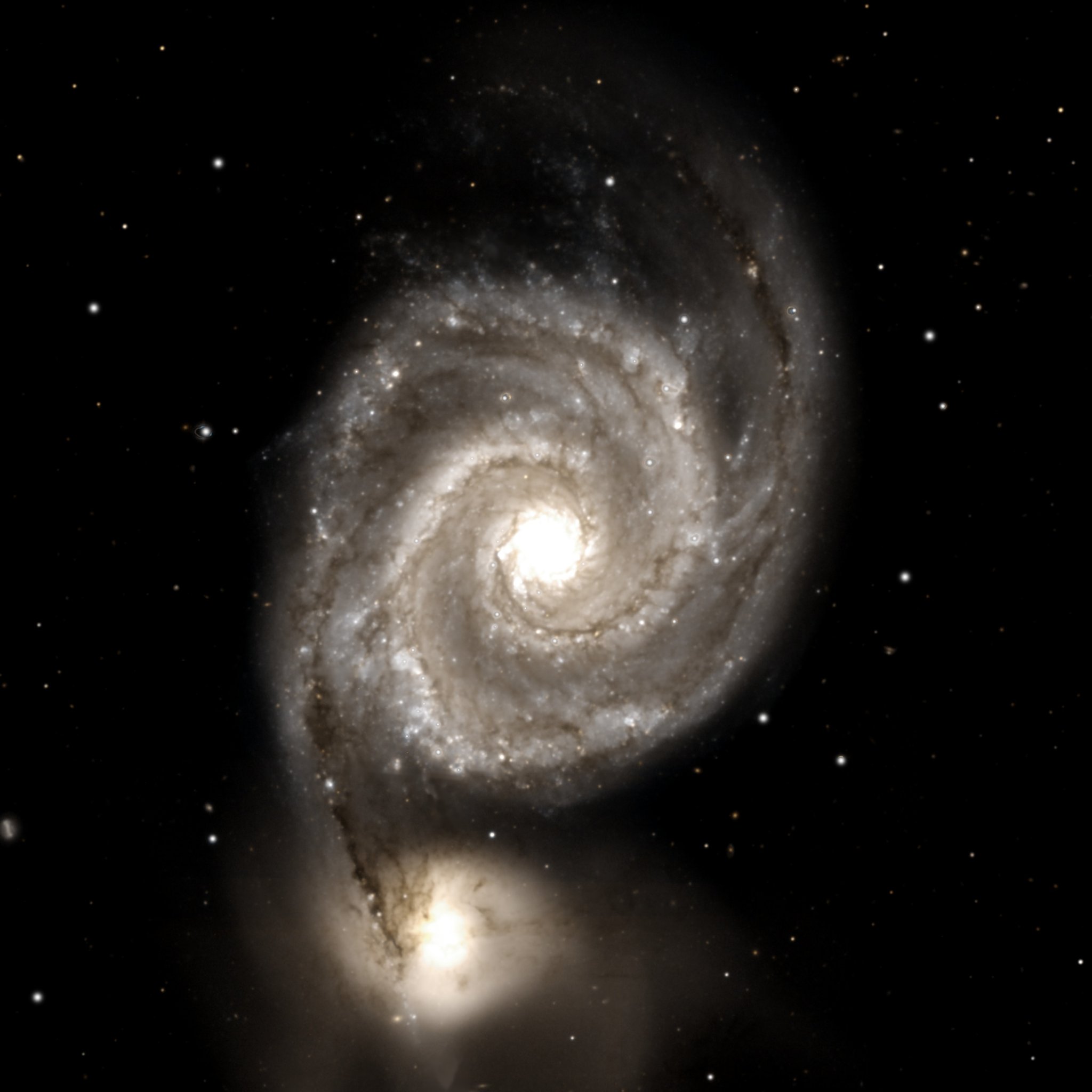
Image data: Legacy Surveys / D. Lang (Perimeter Institute); DESI Legacy Imaging Surveys / DR9 (BASS, Bok 2.3-m telescope, Steward Observatory/University of Arizona, Kitt Peak) — public archive. Reprocessed from raw survey bricks by Kyle Eberly / Sitreps.
- My telescope
- ZWO Seestar S50 — a 50 mm (2-inch) lens
- This telescope
- Bok 2.3-meter (Kitt Peak, Arizona) — roughly 2,100× more light-collecting area
- Pixel scale
- 2.4″/px (Seestar) vs 0.262″/px — about 9× finer detail
- An honest footnote
- The survey’s third filter was unusable in this field, so this image is built from the two healthy ones — details in the full entry
Same object, same physics — the difference is aperture, sky, and pixel scale. The part that surprised me: professional data breaks too. One of the survey’s three color filters was defective across this whole field, and the honest fix was to drop it and build the image from the two healthy ones rather than fake the third. The instrument buys you photons; the processing still has to earn the picture.
One photo. One lesson.
New entries land when the sky cooperates. Get them by email, plus the Sitreps jobs newsletter — no schedule, no spam. Unsubscribe from either one anytime.
Object data
- Catalog
- M51 · NGC 5194
- Companion
- NGC 5195
- Constellation
- Ursa Major
- Type
- Grand-design spiral galaxy
- Distance
- 23 million light-years
- Diameter
- ~76,000 light-years
- Discovery
- 1773 · Charles Messier
- First spiral identified
- 1845 · Lord Rosse