M88 — Spiral Galaxy in the Virgo Cluster
One of thousands, 47 million light years away
What you're looking at
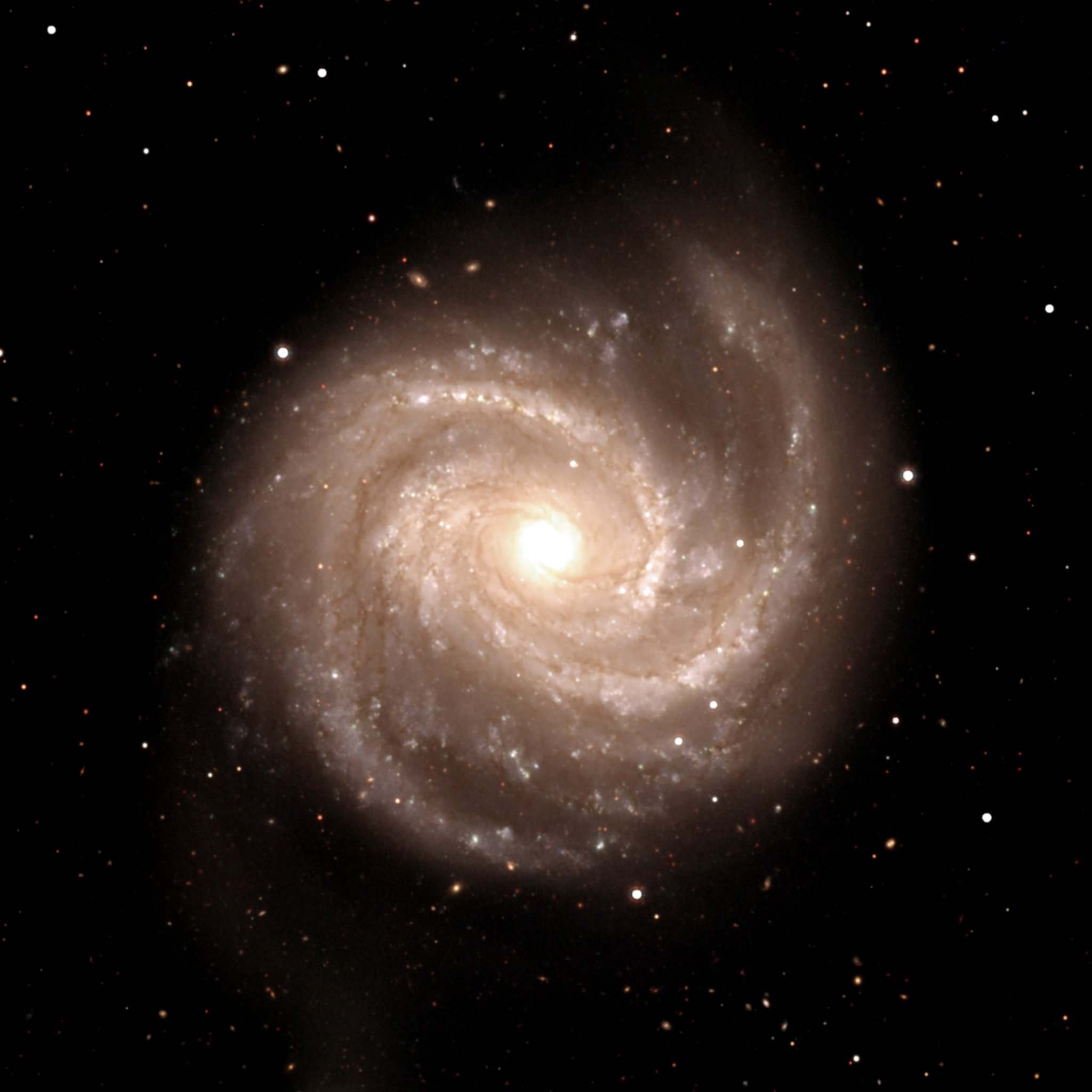
M88 is a face-on spiral galaxy about 47 million light years from Earth, and one of the brightest members of the Virgo Cluster — a dense gravitational neighborhood of more than 1,300 galaxies that sits at the center of our own Local Supercluster.
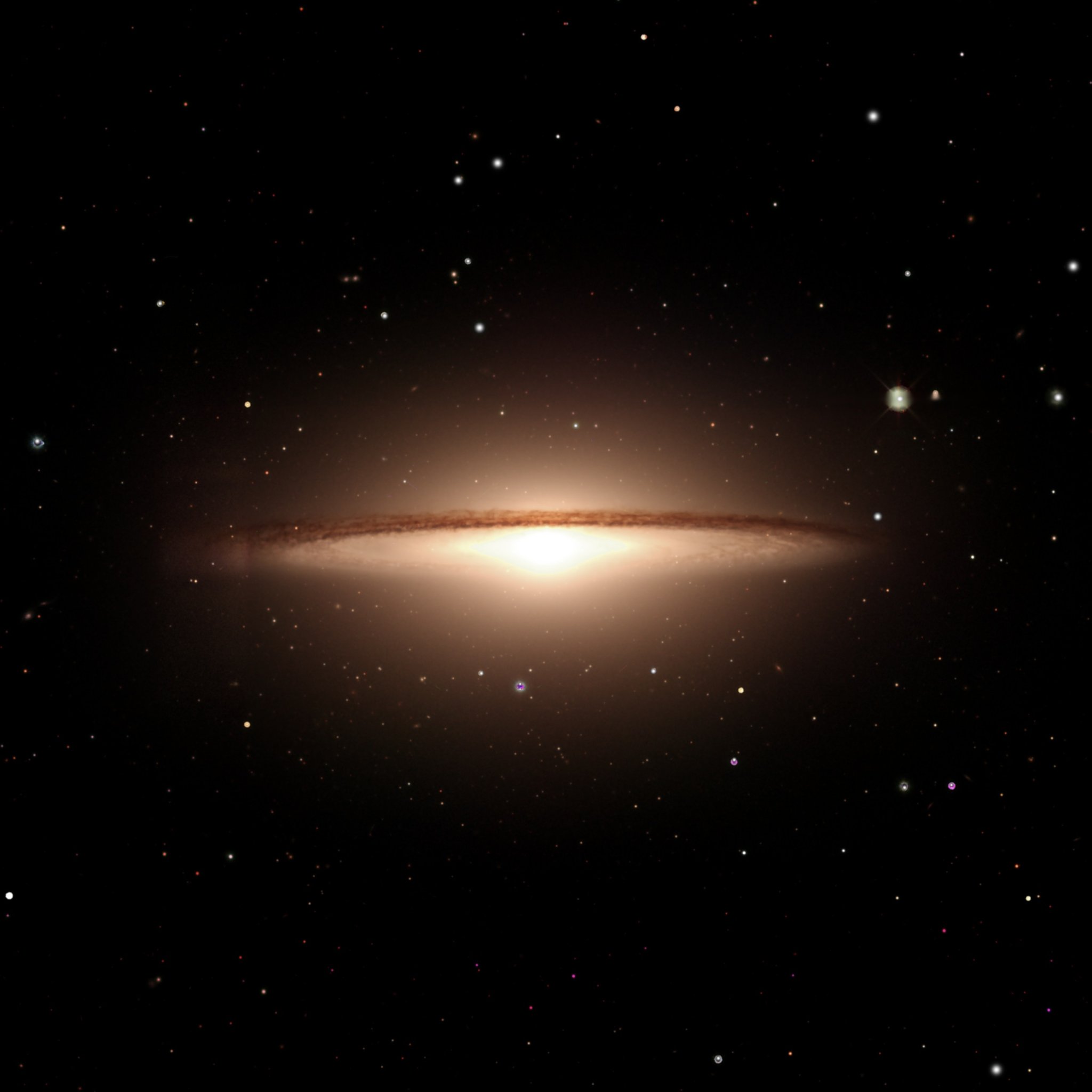
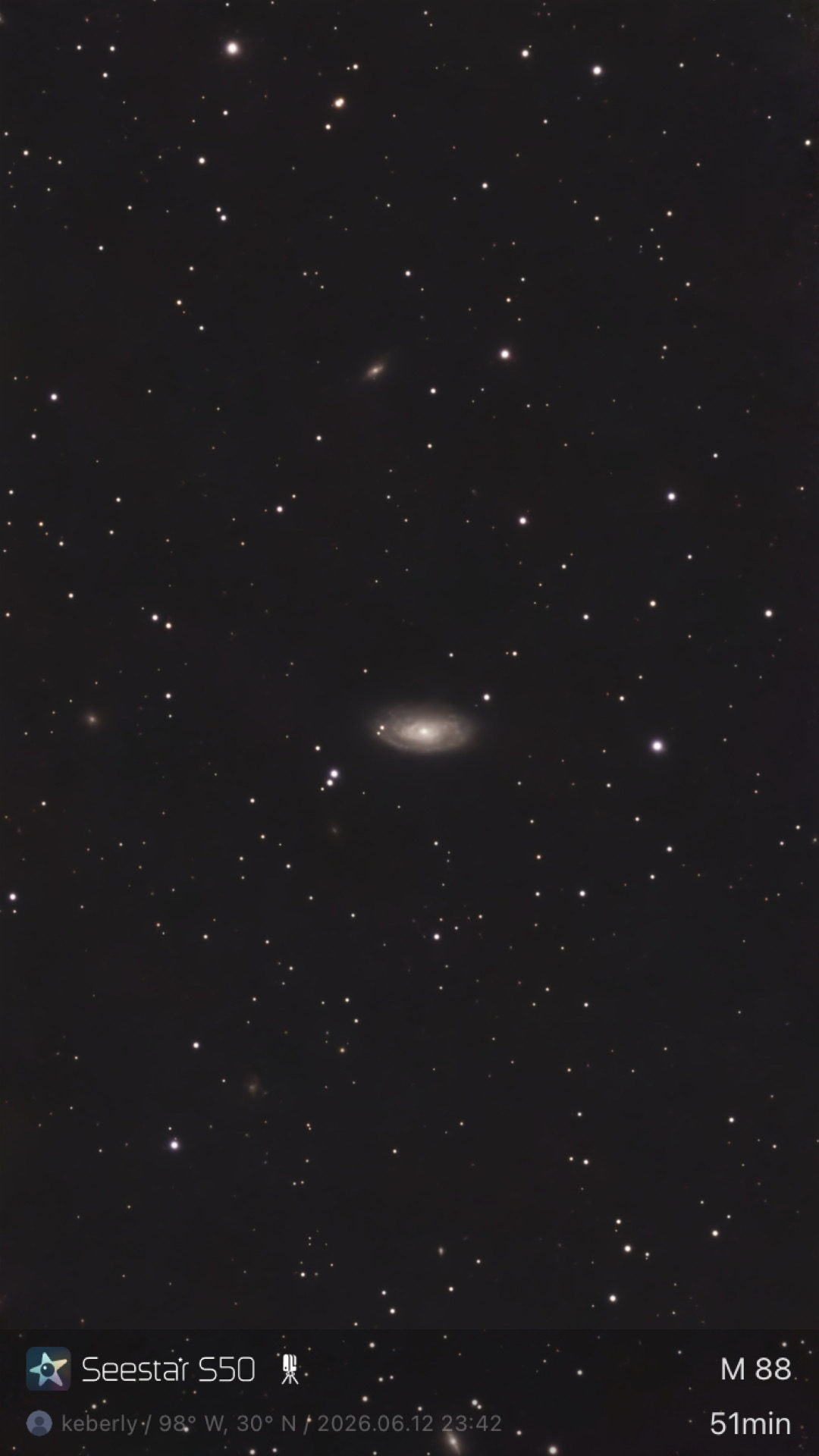
If you look carefully at this frame, you'll see other galaxies scattered through it: an edge-on spiral above and to the right of M88, smaller smudges off to the sides, faint fuzzy points all the way to the corners. Most of those are Virgo Cluster members too. The cluster is so densely packed that a wide-field image of any one galaxy in it usually catches several others for free.
All of these galaxies are bound to each other by gravity. They orbit a common center of mass that's anchored, in large part, by the supermassive elliptical M87 — a galaxy in the same cluster that hosts the first black hole ever directly imaged.
The lesson
The Virgo Cluster is the reason any of this matters.
M88 by itself is a beautiful spiral. But the real picture is the cloud of background galaxies that came along for the ride — the edge-on spiral above it, the half-dozen faint smudges scattered through the frame. The Virgo Cluster is what holds M88 in place, what set its rotation, what determines what it'll look like in another billion years.
It's also the analog every founder eventually figures out: the cluster matters more than the individual. Your network, the people in adjacent orbits, the gravity well you're embedded in — that's what determines what you can become. The brightest galaxy in an empty patch of sky doesn't get to be a galaxy for long.
Same object, from a 4-meter survey telescope
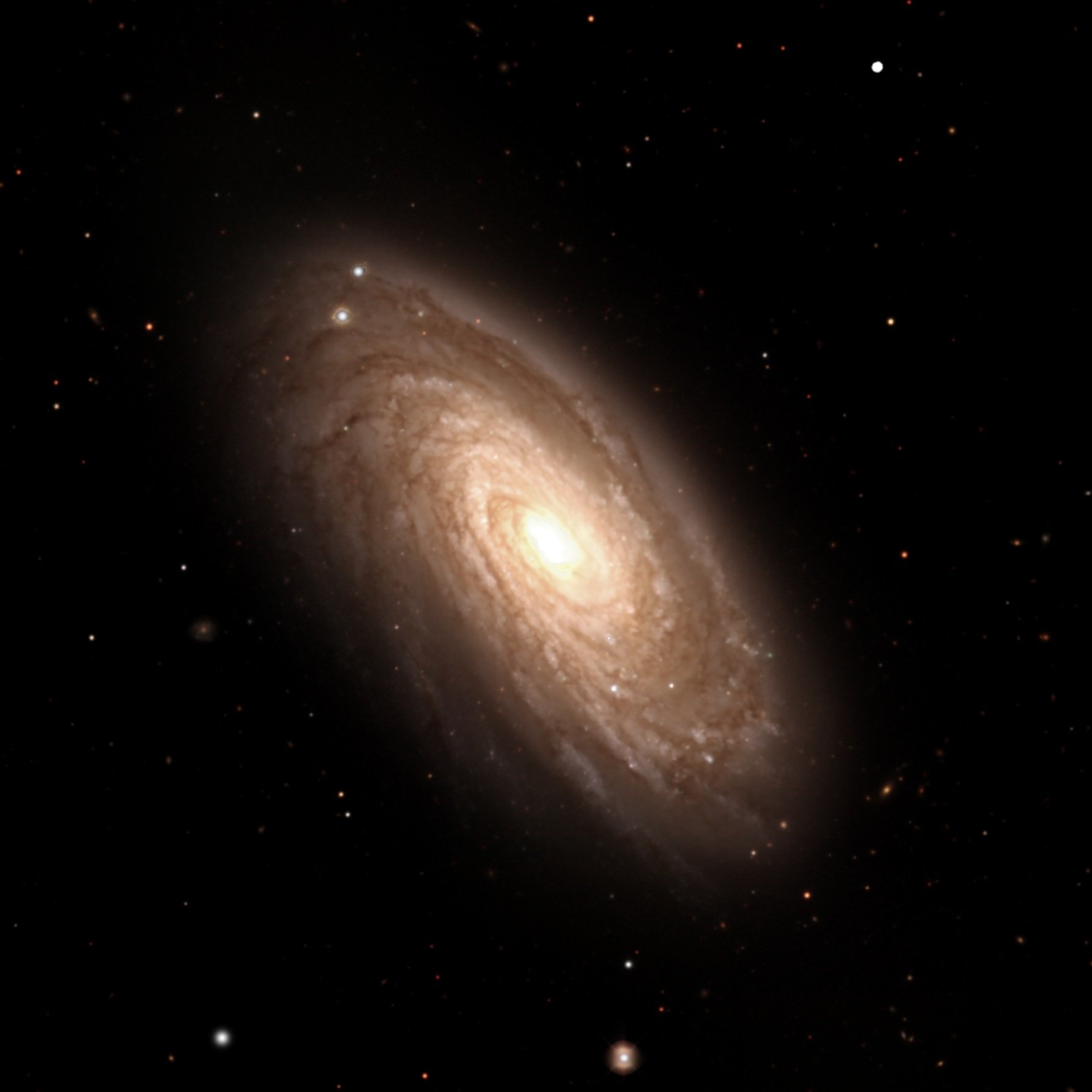
Image data: Legacy Surveys / D. Lang (Perimeter Institute); DESI Legacy Imaging Surveys / DR10 (DECam, built by the Dark Energy Survey collaboration, on the Víctor M. Blanco 4-m telescope, CTIO/NOIRLab/NSF/AURA) — public archive. Reprocessed from raw survey bricks by Kyle Eberly / Sitreps.
- My telescope
- ZWO Seestar S50 — a 50 mm (2-inch) lens
- This telescope
- Víctor M. Blanco 4-meter (DECam, Chile) — roughly 6,400× more light-collecting area
- Pixel scale
- 2.4″/px (Seestar) vs 0.262″/px (DECam) — about 9× finer detail
- The data
- Raw survey “bricks” from the public DESI Legacy Surveys archive, stitched and processed with my own pipeline
Same object, same physics — the difference is aperture, sky, and pixel scale. This telescope sits on a Chilean mountaintop with a mirror thousands of times the area of my lens. The part that surprised me: its raw data needs the same work mine does — sky gradients, stitching, color balance — and both versions came out of the same Python pipeline. The instrument buys you photons; the processing still has to earn the picture.
One photo. One lesson.
New entries land when the sky cooperates. Get them by email, plus the Sitreps jobs newsletter — no schedule, no spam. Unsubscribe from either one anytime.
Object data
- Catalog
- M88 · NGC 4501
- Constellation
- Coma Berenices
- Type
- Intermediate spiral galaxy (Sb)
- Distance
- ~47 million light-years
- Diameter
- ~115,000 light-years
- Cluster
- Virgo Cluster (Local Supercluster anchor)
- Bonus in frame
- Edge-on background spiral + multiple cluster members
- Discovery
- 1781 · Charles Messier