
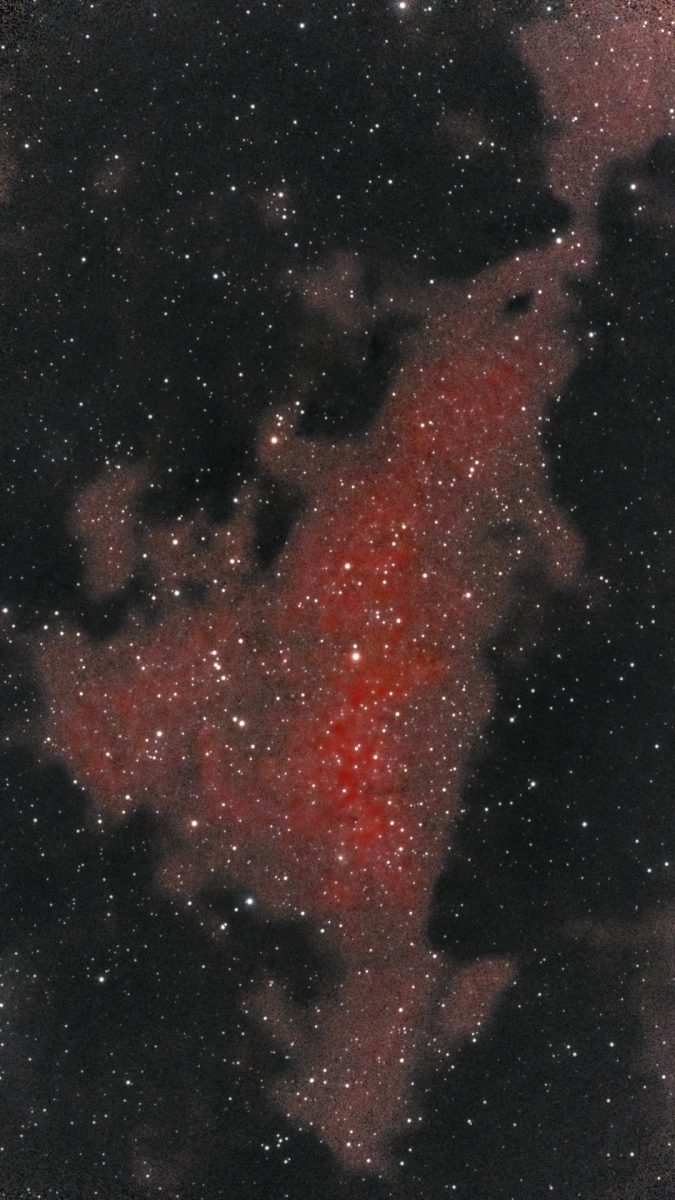
IC 1318 — The Butterfly Nebula
Glowing hydrogen split by a river of dust, in the heart of Cygnus
What you're looking at
IC 1318 is the glowing hydrogen that surrounds Sadr, the star at the center of the Northern Cross — though the nebula isn't actually related to Sadr at all. The star is a foreground object 1,800 light years away; the gas glows nearly 5,000 light years behind it, lit by hotter stars hidden in the region.
The butterfly shape comes from a dark molecular cloud — LDN 889 — lying in front of the glowing gas and splitting it into two bright wings. The blackness isn't absence; it's a river of dust dense enough to blot out everything behind it.
This region sits in the thick of the Cygnus star-forming complex, one of the richest parts of the entire northern Milky Way — which is why the frame is crowded edge-to-edge with foreground stars.
The lesson
This image sat in the archive for a month. Nobody knew it was one of the best captures of the summer.
It was shot on an August night, filed by its capture, and forgotten — rediscovered by accident while retrieving something else. Two hours of excellent data, already paid for, sitting in inventory.
Audit your own archive before you plan new work. Some of what you're about to go get, you already have.
Object data
- Catalog
- IC 1318 (Sadr region)
- Constellation
- Cygnus
- Type
- Emission nebula complex
- Distance
- ~4,900 light-years (the gas — Sadr itself is a 1,800 ly foreground star)
- Dark divider
- LDN 889 — the dust river that creates the butterfly wings
- Region
- Cygnus X star-forming complex