
SITREPS ASTRONOMY
How It's Made
One galaxy, from raw archive to finished picture
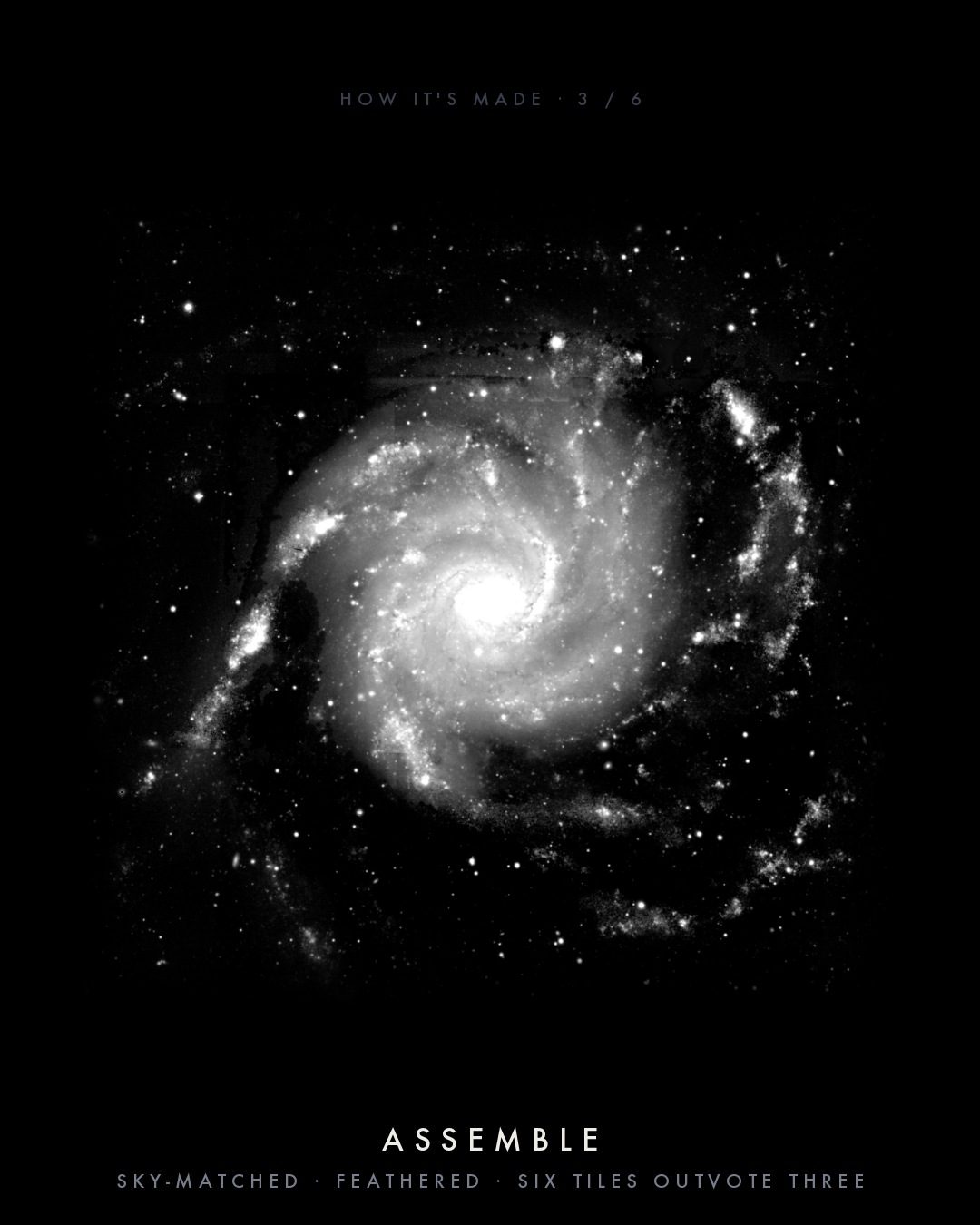
The whole pipeline in 31 seconds — every frame built from the real M101 data.
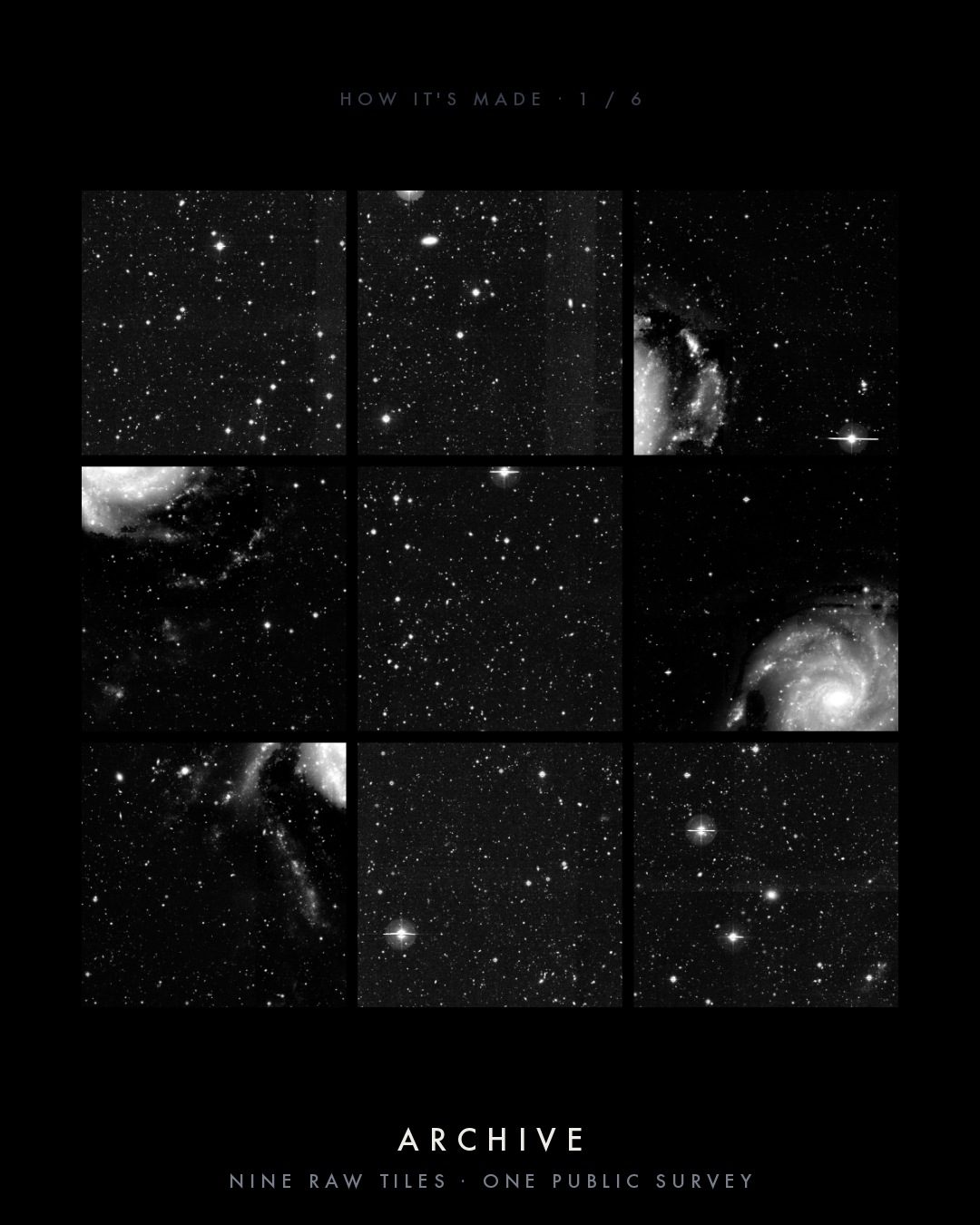
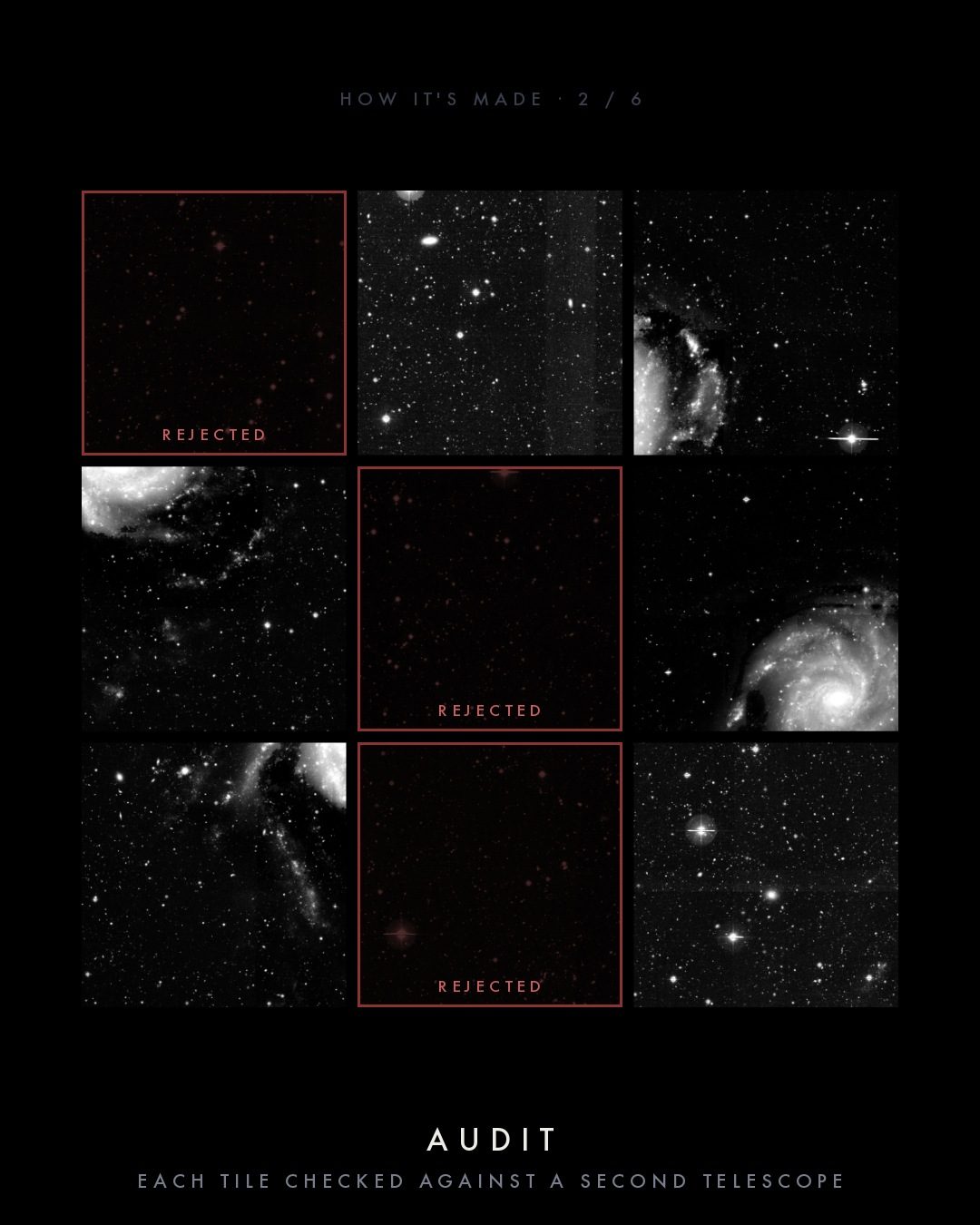
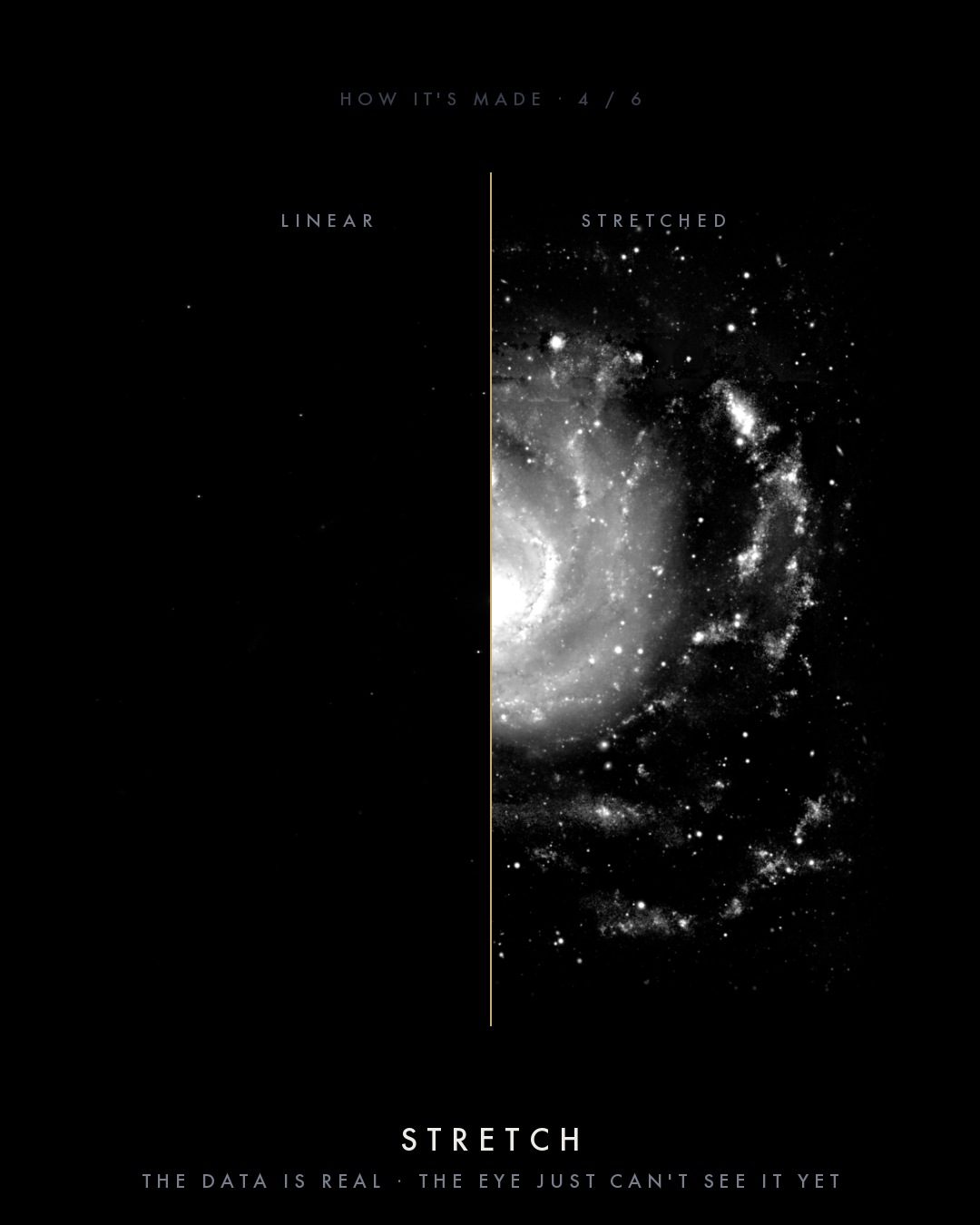
The survey-telescope images in this journal don't come out of the archive looking like pictures. They come out as raw tiles of linear data — nearly black to the eye, split across files, some of them quietly defective. Everything between that and the finished image is the pipeline below. It's the same one, end to end, whether the photons came from my backyard Seestar or a 4-meter national telescope.
Where the light comes from
Every telescope is a bucket for light. The wider the bucket, the more photons per minute — and everything else in the pipeline is about not wasting them. These four buckets are drawn to scale.
- CollectThe aperture gathers photons — minutes of them, stacked for hours
- RecordA cooled sensor counts them, one exposure at a time
- StackDozens of exposures average away the noise
- StretchThe same pipeline you saw above turns counts into a picture
The small bucket in that chart is the one on my patio — a ZWO Seestar S50, ~$800, and the reason this journal exists.
Some links here are affiliate links (ZWO and Amazon Associates) — Sitreps may earn a small commission, at no extra cost to you.
The proof
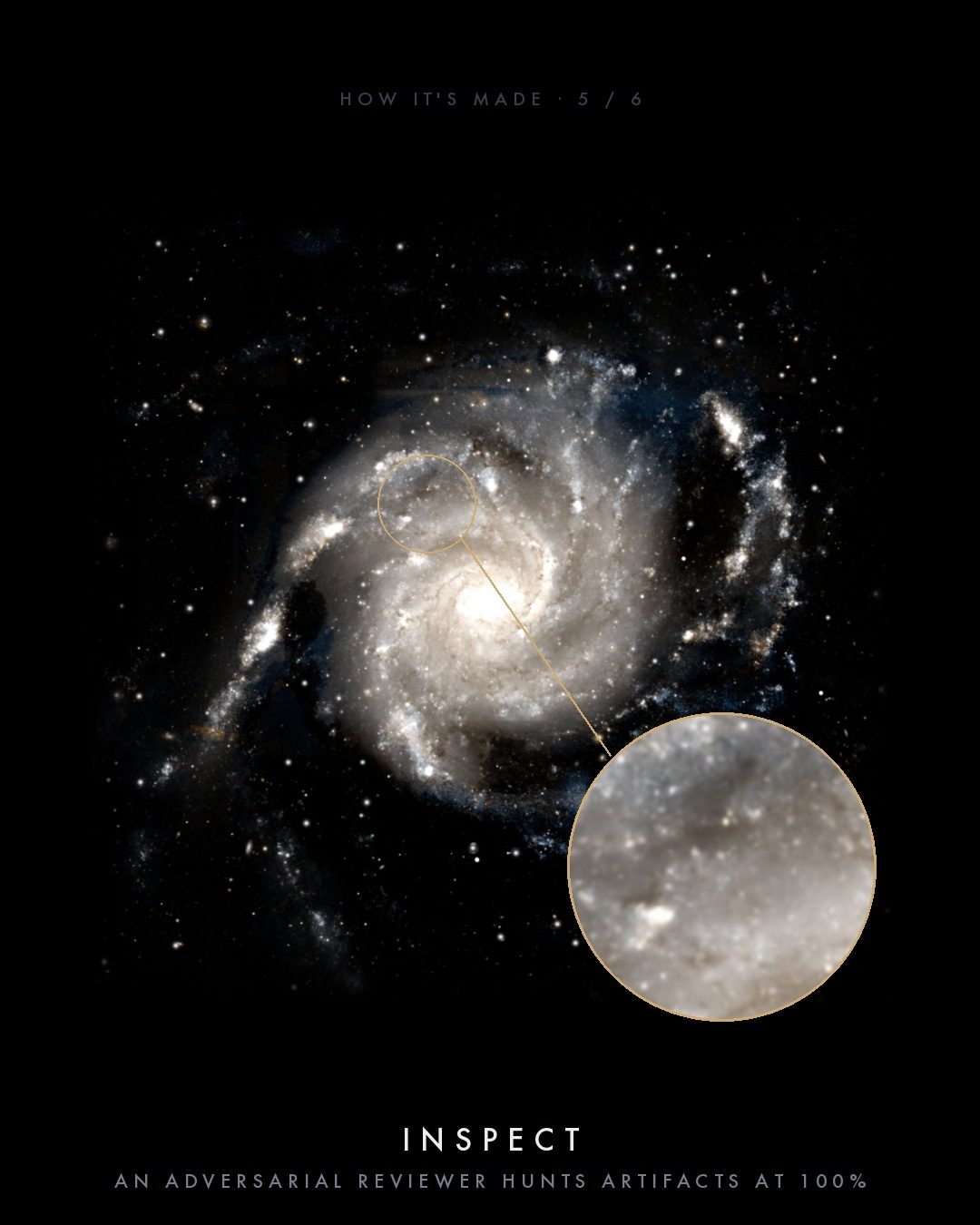
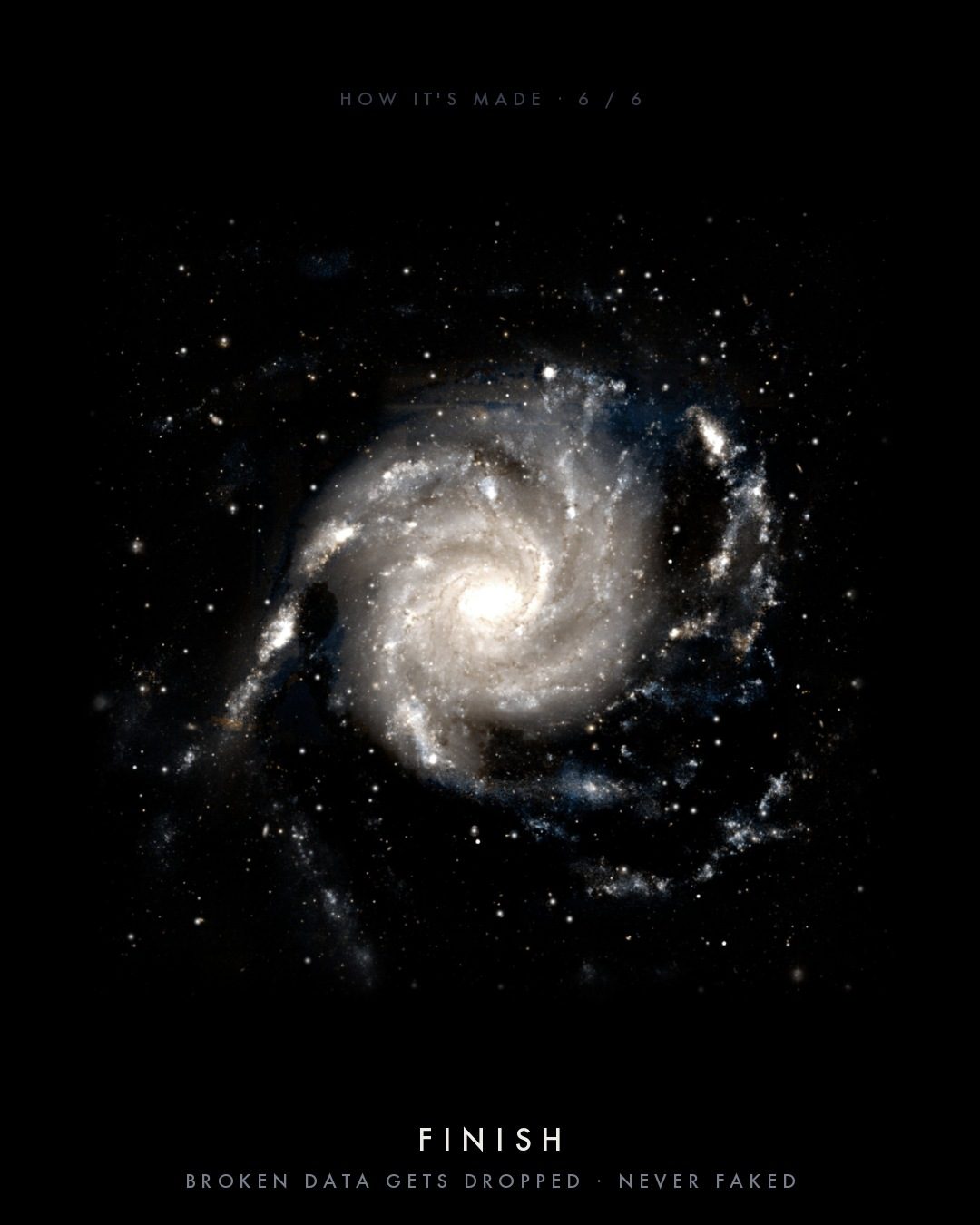
The galaxy in this walkthrough is M101, the Pinwheel — the hardest field of the whole series. Three of its nine tiles were defective, its third color filter was unusable, and the "flaw" everyone wanted repaired turned out to be the galaxy's real shape. The finished entry tells that whole story.
One photo. One lesson.
New entries land when the sky cooperates. Get them by email — no schedule, no spam, just what the telescope caught and what it taught.