
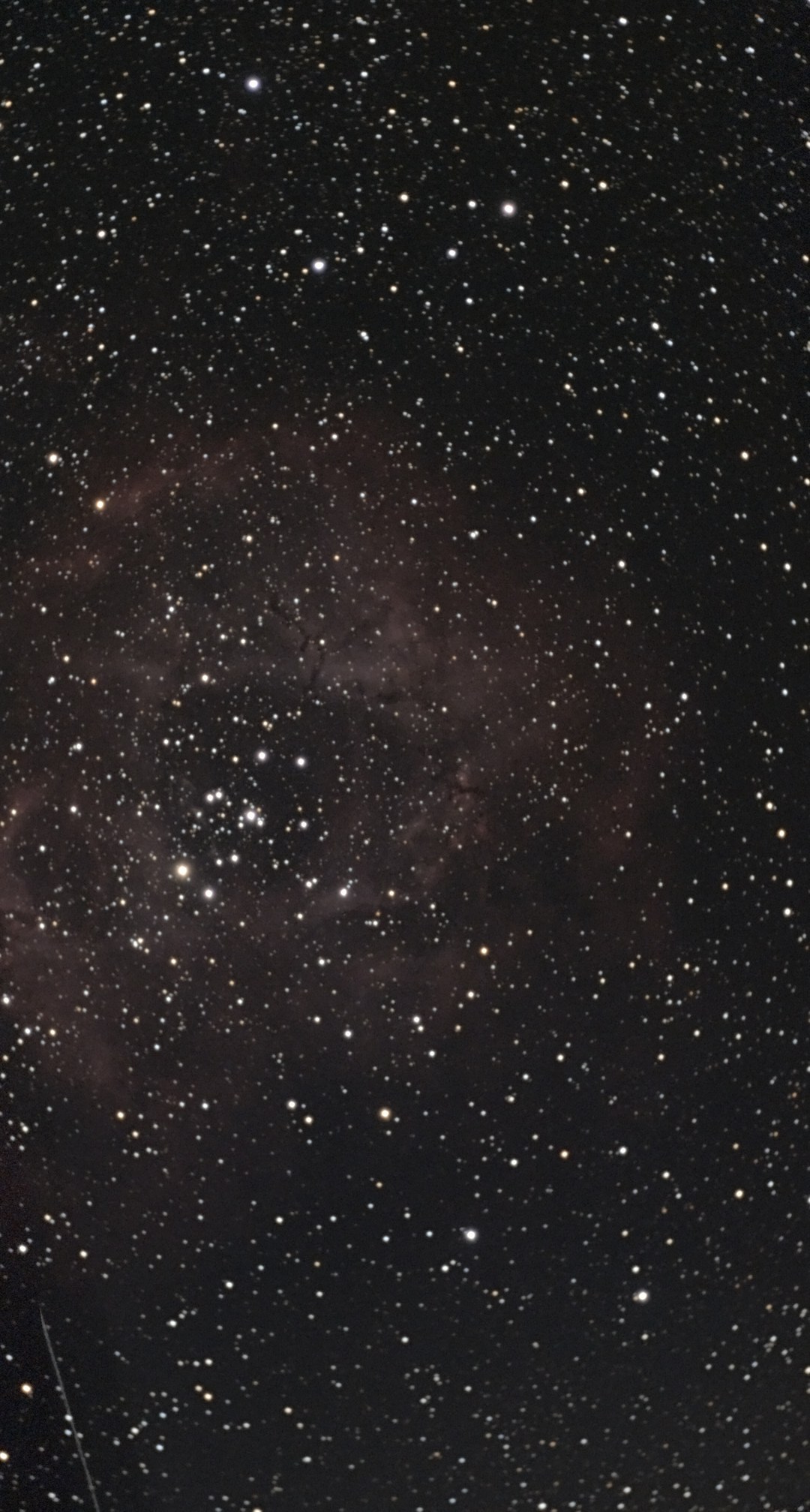
C49 — The Rosette Nebula
A living entry: the first 24 minutes of a winter project
What you're looking at
The Rosette is a ring of glowing hydrogen about 130 light-years across, 5,000 light-years away in Monoceros — and the hole in the middle of the rose is real. The young cluster at the center, NGC 2244, formed from this cloud and its hottest stars have spent the last few million years blowing the gas outward, hollowing the cavity they now shine from.
It's the same story as the Heart, the Soul, and the Pacman — a cluster carving its birth cloud — caught at the photogenic moment when the carving has made a near-perfect wreath. The dark threads across the ring are dense dust lanes seen in silhouette, each one a potential nursery for the next generation of stars.
Almost everything the Rosette emits is hydrogen-alpha: one deep-red wavelength, 656 nanometers. That's why a broadband scouting frame shows mostly the cluster, and why this target belongs to the dual-band filter and the long winter nights ahead.
The lesson
Twenty-four minutes, wrong filter, right call. The alternative to this imperfect scouting frame wasn't a better frame — it was no frame, because the night was ending and the Rosette was finally up.
Starting badly beats waiting for ideal conditions, provided you're honest about which one you did. This entry says 'version one' right on it, and the infrared map next to it shows exactly how far there is to go.
The winter will do the rest. Check back.
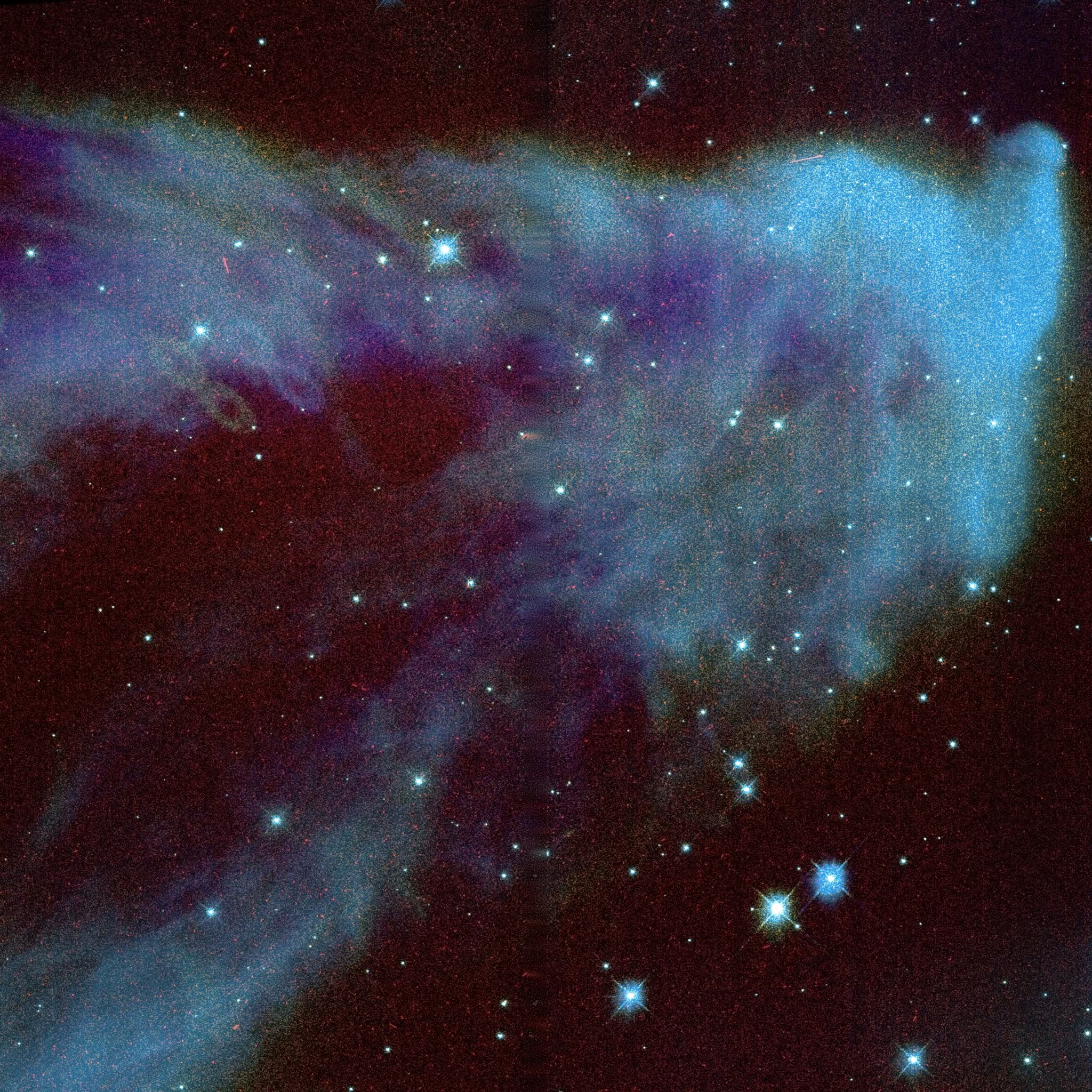
The same rose, in infrared — NASA’s WISE space telescope
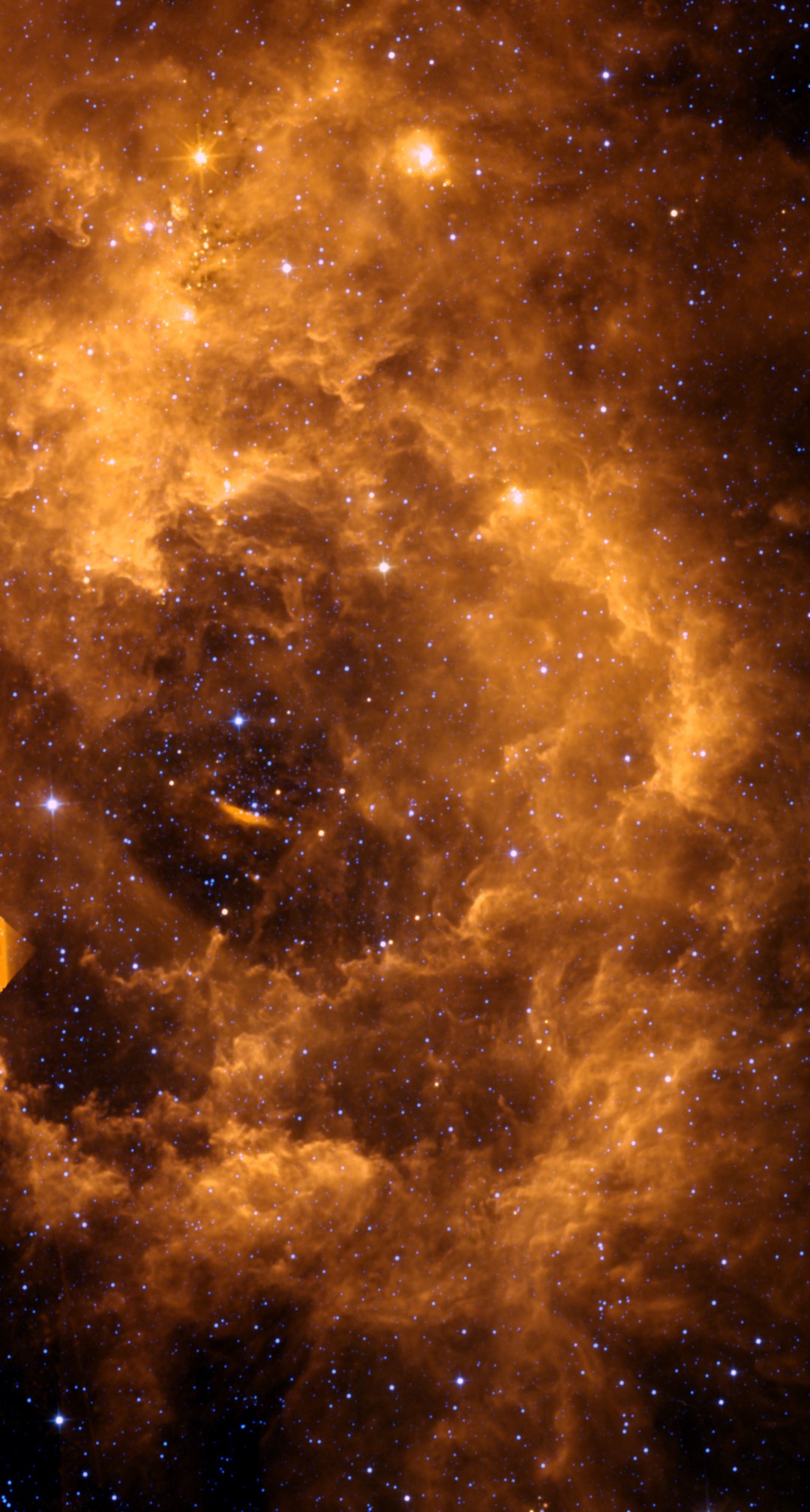
Image data: NASA/JPL-Caltech, WISE (ALLWISE atlas tiles), public archive via IRSA. Seven-tile mosaic, reprocessed and registered to the backyard frame by Kyle Eberly / Sitreps.
- My telescope
- ZWO Seestar S50 Pro — 50 mm lens, visible light, 24 minutes so far
- This telescope
- WISE — a 40 cm space telescope above the atmosphere
- The light
- 3.4, 4.6 and 12 µm infrared — heat the atmosphere never lets through
- The data
- Seven ALLWISE sky-atlas tiles from NASA’s IRSA archive, star-registered onto my exact framing
Same deal as the Jellyfish entry: the archive view is published first, as the map. The Rosette is one of the sky’s great emission showpieces and nearly all of its light is one red wavelength — exactly what the dual-band filter keeps. The before picture is on the record; the winter gets to fill it in.
Object data
- Catalog
- C49 · NGC 2237–2246
- Constellation
- Monoceros
- Type
- Emission nebula (H II region)
- Distance
- ~5,000 light-years
- Size
- ~130 light-years — the hole in the middle is real
- Central cluster
- NGC 2244 — carved the cavity it shines from
- Status
- LIVING ENTRY — 24 min broadband; dual-band hours coming
More from the journal
One photo. One lesson.
New entries land when the sky cooperates. Get them by email — no schedule, no spam, just what the telescope caught and what it taught.