
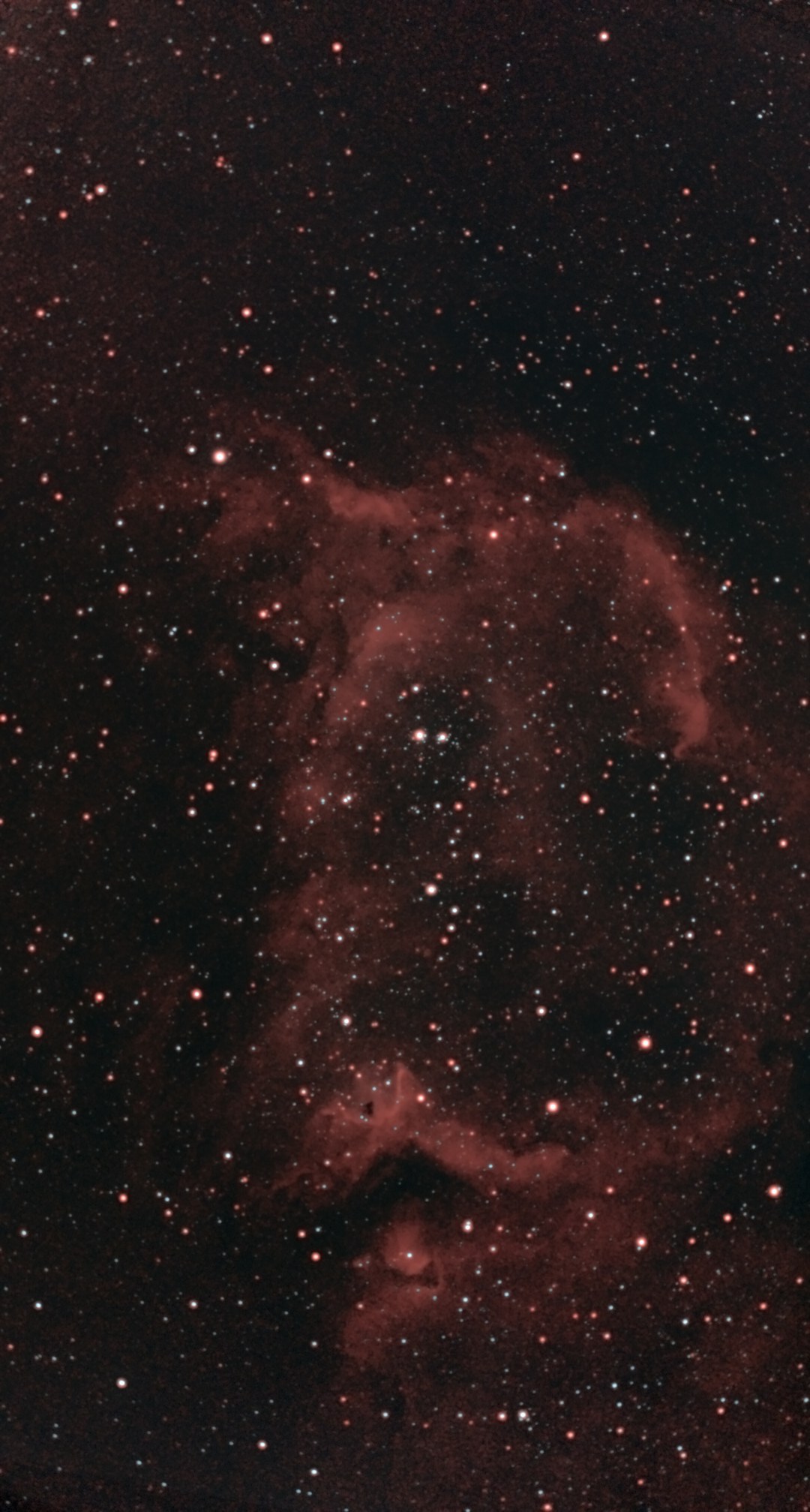
IC 1848 — The Soul Nebula
The Heart, a million years further down the road
What you're looking at
IC 1848 is the other half of the Heart and Soul complex — the same stretch of the Perseus spiral arm, about 6,500 light-years out, roughly 150 light-years of glowing hydrogen. Radio astronomers call it W5, and it is one of the best-studied laboratories anywhere for how one generation of stars triggers the next.
The Soul is the Heart's future. Both nebulae are bubbles inflated by young clusters, but the Soul's clusters have been at it longer: their radiation has pushed the gas into thin, far-flung walls, which is why the Soul glows at about half the Heart's surface brightness — the same energy spread over a more blown-out shell. Dimmer per square arcminute, not weaker.
Look along the bubble rims: that's where the next chapter is happening. The expanding walls compress the gas they plow into, and embedded in those rims are brand-new stars — a second generation, triggered by the first. The pillars inside the Soul all point back at the clusters that carved them, like trees bent away from a prevailing wind.
The lesson
Shot one night after the Heart, and the pair now tells a single story in two chapters: the same physics, separated by a million years. The Heart is the fire at full roar. The Soul is the same fire later — walls pushed out, thinner, quieter, and seeding new stars at its edges.
Organizations age the same way. The intense, dense, everyone-in-one-room phase doesn't last; the energy that defines it pushes everything outward into something bigger, thinner, and calmer. That's not decline — the Soul is building its second generation of stars in the very walls the first generation blew open.
The leadership question isn't how to stay the Heart forever. It's whether, by the time you've become the Soul, your expansion compressed anything worth igniting at the edges.
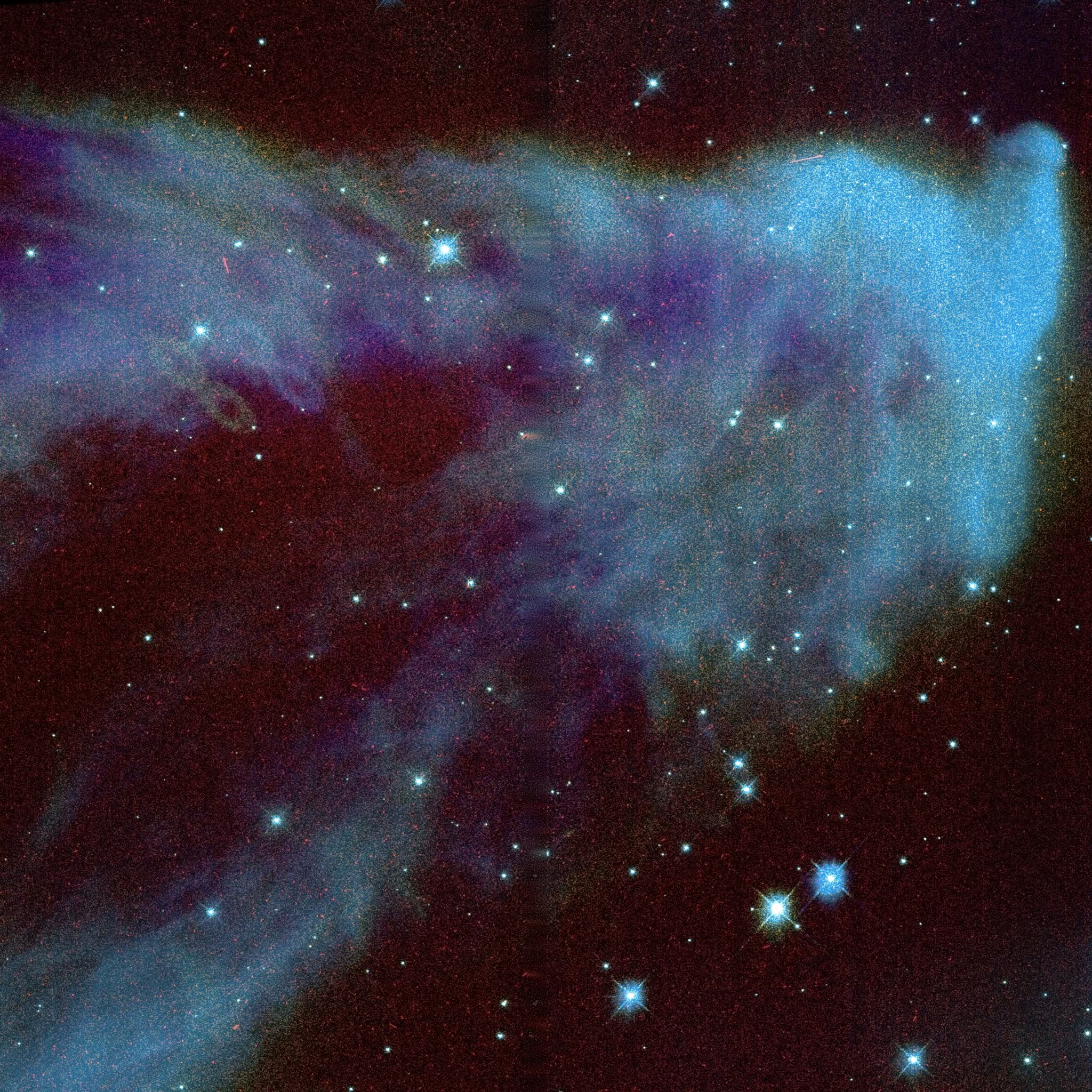
The same soul, in infrared — NASA’s WISE space telescope
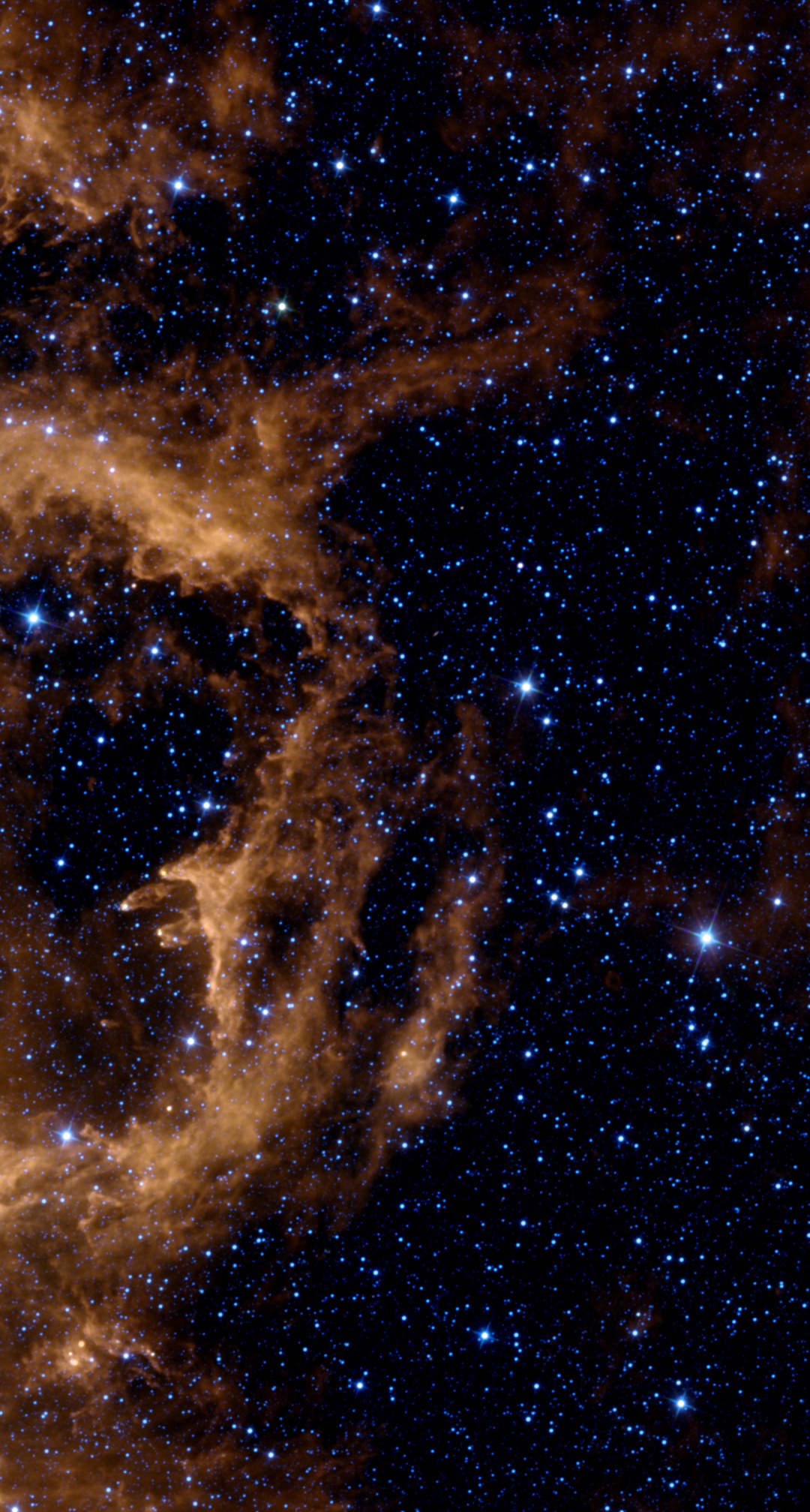
Image data: NASA/JPL-Caltech, WISE (ALLWISE atlas tiles), public archive via IRSA. Eight-tile mosaic, reprocessed and registered to the backyard frame by Kyle Eberly / Sitreps.
- My telescope
- ZWO Seestar S50 Pro — 50 mm lens, visible light
- This telescope
- WISE — a 40 cm space telescope; the advantage is altitude, not aperture
- The light
- 3.4, 4.6 and 12 µm infrared — heat radiation the atmosphere never lets through
- The data
- Eight ALLWISE sky-atlas tiles from NASA’s IRSA archive, mosaicked and star-registered onto my exact framing
Same recipe as the Heart’s infrared pair, deliberately: the two entries are one experiment run twice. Gas view and dust view, side by side, on both halves of the Heart and Soul complex — so you can compare not just two telescopes, but two ages of the same process.
Object data
- Catalog
- IC 1848 · Sharpless 2-199 · W5
- Constellation
- Cassiopeia
- Type
- Emission nebula (H II region)
- Distance
- ~6,500 light-years
- Size
- ~150 light-years of blown-out bubbles
- Partner
- IC 1805, the Heart — one frame to the west
- Integration
- 527 × 30s = 4.4 hours — deepest stack in this journal
More from the journal
One photo. One lesson.
New entries land when the sky cooperates. Get them by email — no schedule, no spam, just what the telescope caught and what it taught.