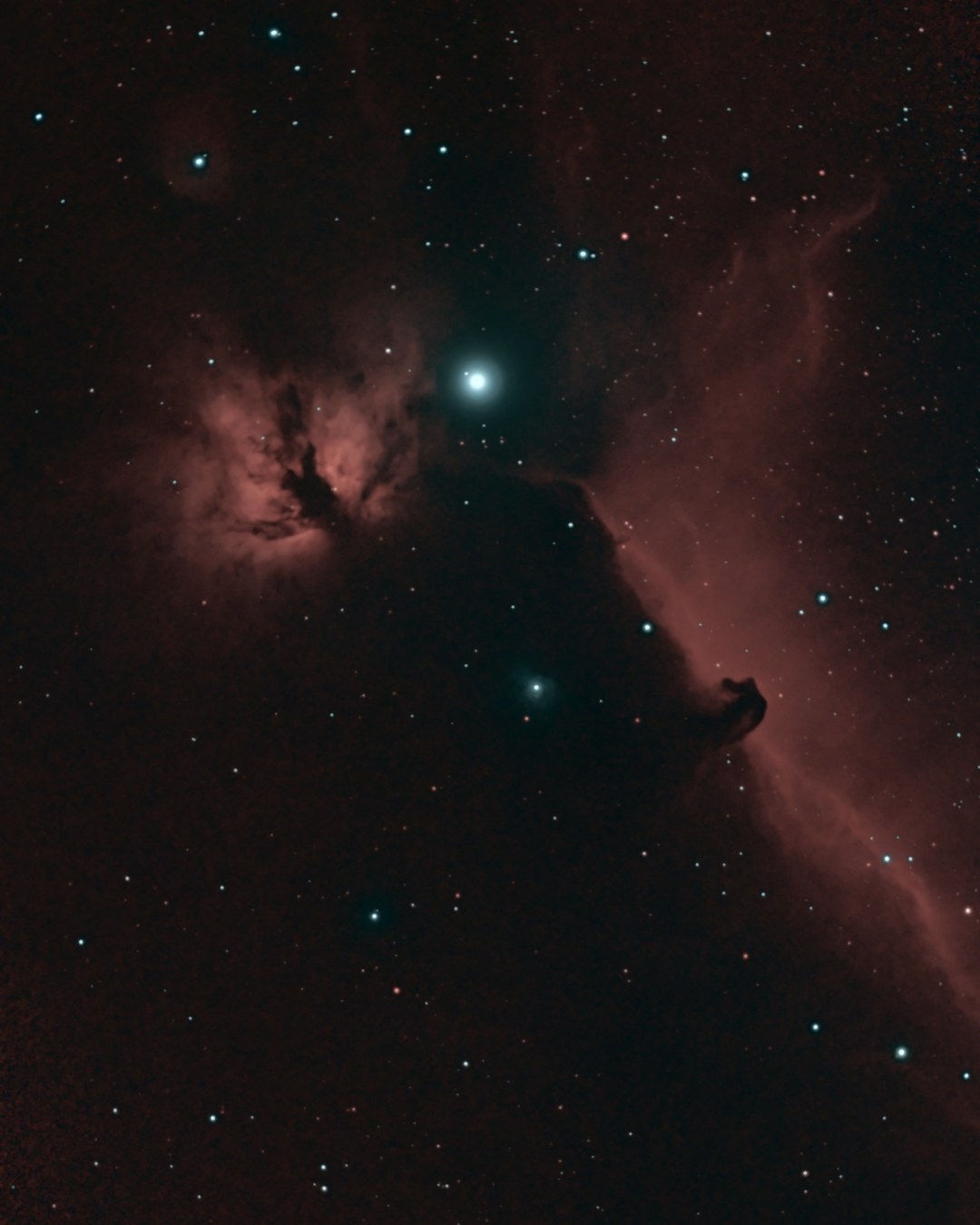
The Horsehead and the Flame — Widefield
The Horsehead, the Flame Nebula and Orion’s Belt star Alnitak, in one frame
What you're looking at
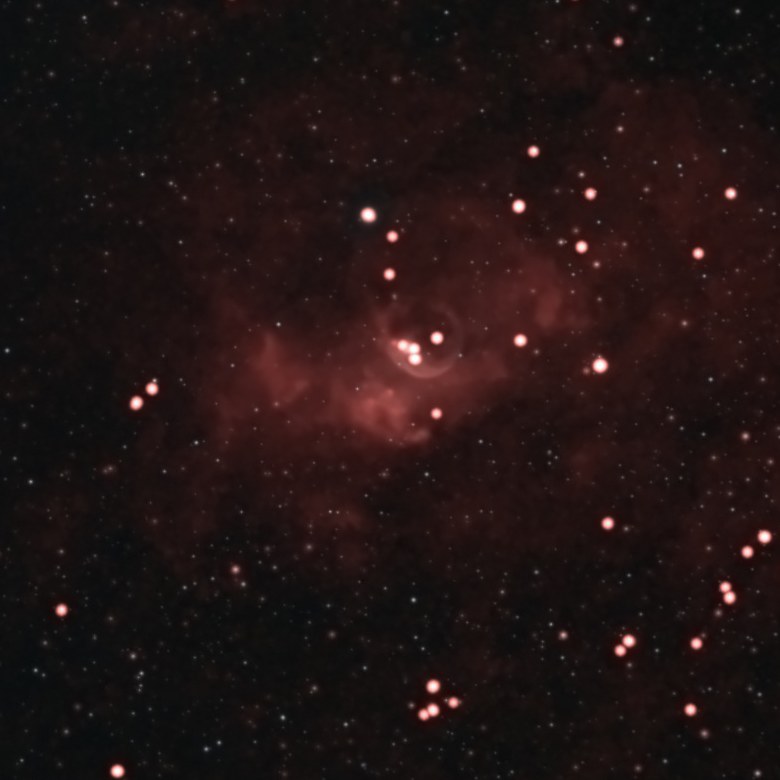
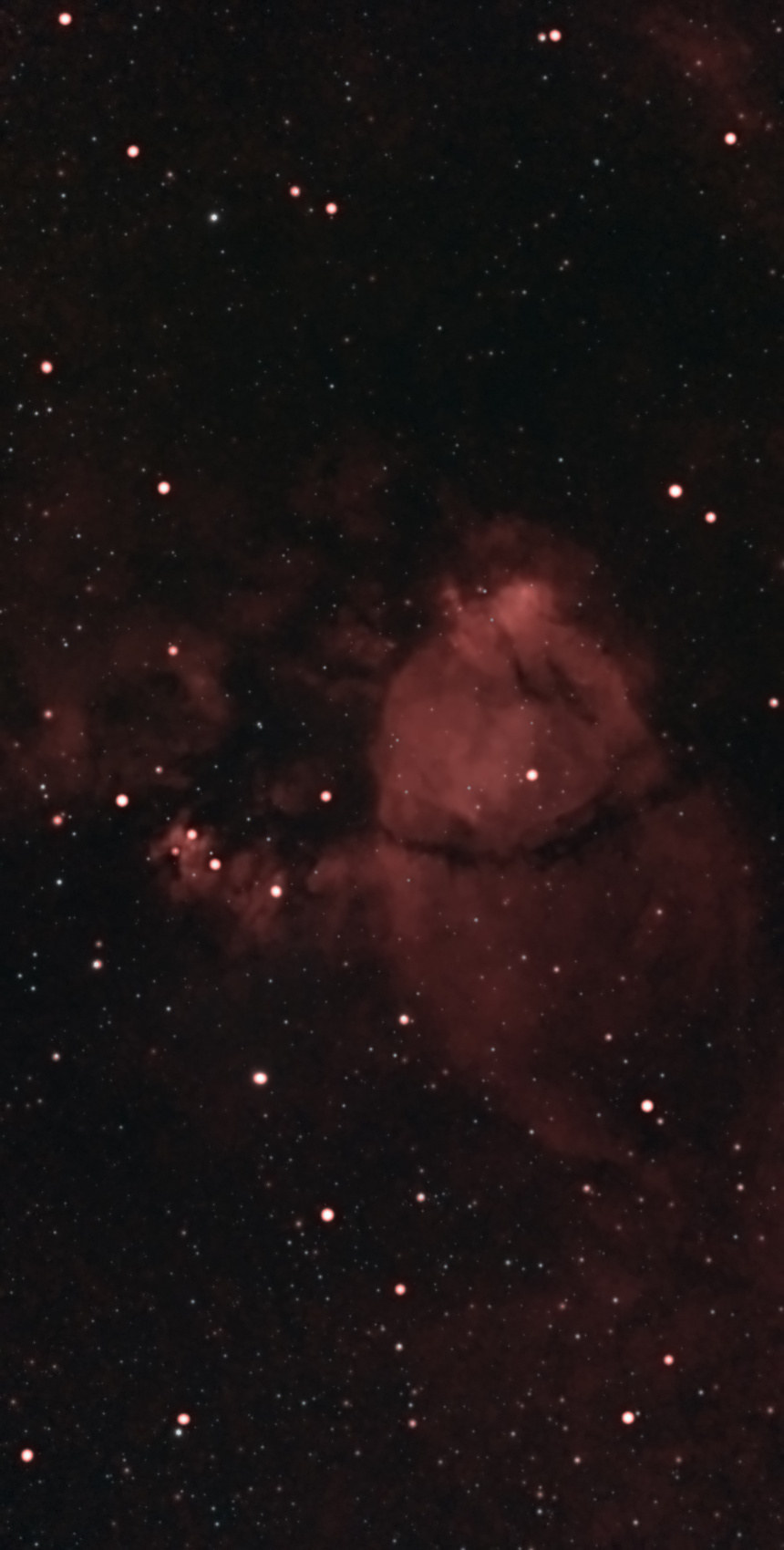
This is one corner of the Orion B molecular cloud, about 1,400 light-years away. The bright star is Alnitak, the eastern star of Orion’s Belt. Below it to the left, the Flame Nebula glows behind lanes of dark dust; to the right, the Horsehead stands in silhouette against IC 434, a sheet of hydrogen lit by the star Sigma Orionis just out of frame.
The Flame looks like it is lit by Alnitak, but most of its glow comes from a cluster of young stars buried inside it, hidden from visible light by the dust. Infrared telescopes see hundreds of them.
The dark mass that runs under both nebulae is the same cloud the Horsehead is carved from. Nearly all the glow in this frame is that cloud, lit by hot young stars, eroded by them, or forming new ones.
The lesson
Two nights on the S50 kept producing a picture with something important cut off at the edge: the horse, or the Flame.
The fix wasn’t a better night. It was a wider frame: the right instrument for the size of the thing I was trying to see.
When every attempt clips something that matters, stop optimizing the attempt and check the field of view.
One photo. One lesson.
New entries land when the sky cooperates. Get them by email, plus the Sitreps jobs newsletter — no schedule, no spam. Unsubscribe from either one anytime.
Object data
- Objects
- Barnard 33 (Horsehead) · NGC 2024 (Flame) · IC 434 · Alnitak (ζ Ori)
- Constellation
- Orion
- Type
- Dark nebula, emission nebulae and a dusty star-forming cloud
- Distance
- ~1,400 light-years
- Integration
- 319 × 30 s = 2.7 hours, dual-band, one night