IC 1795 — The Fishhead Nebula
The youngest corner of the Heart & Soul, still making stars
What you're looking at
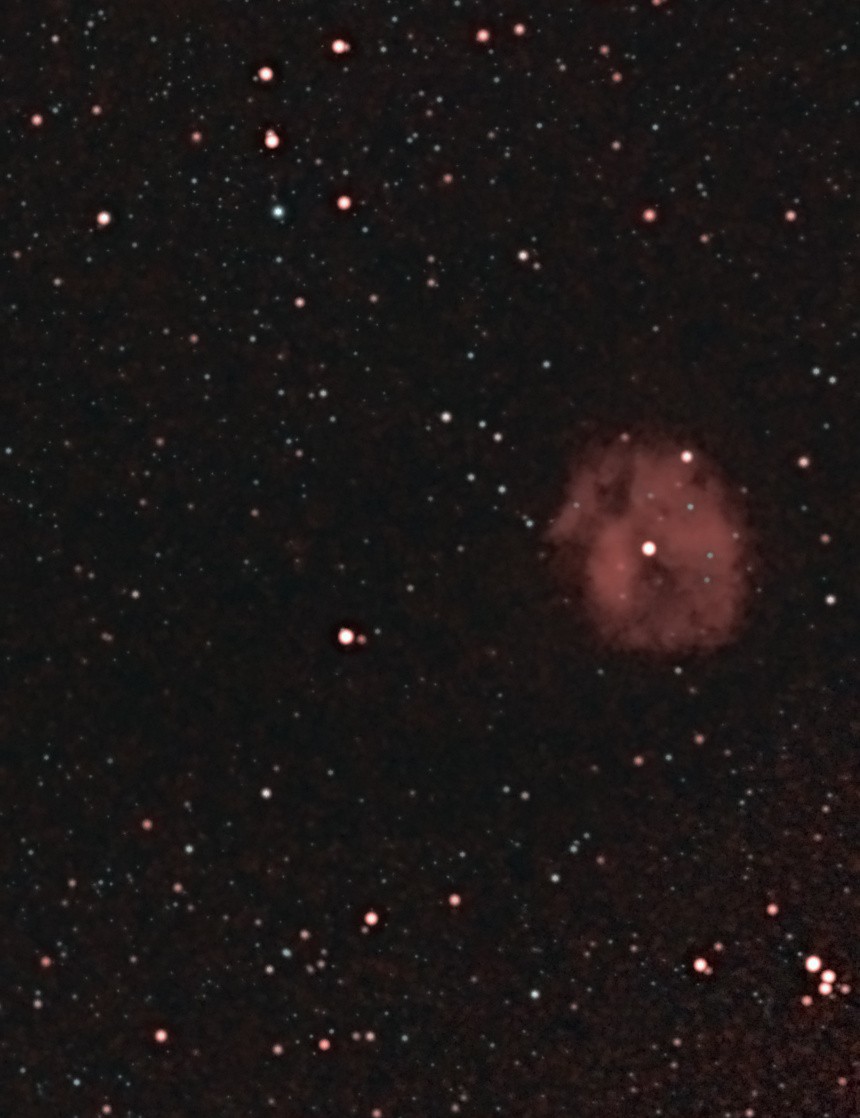
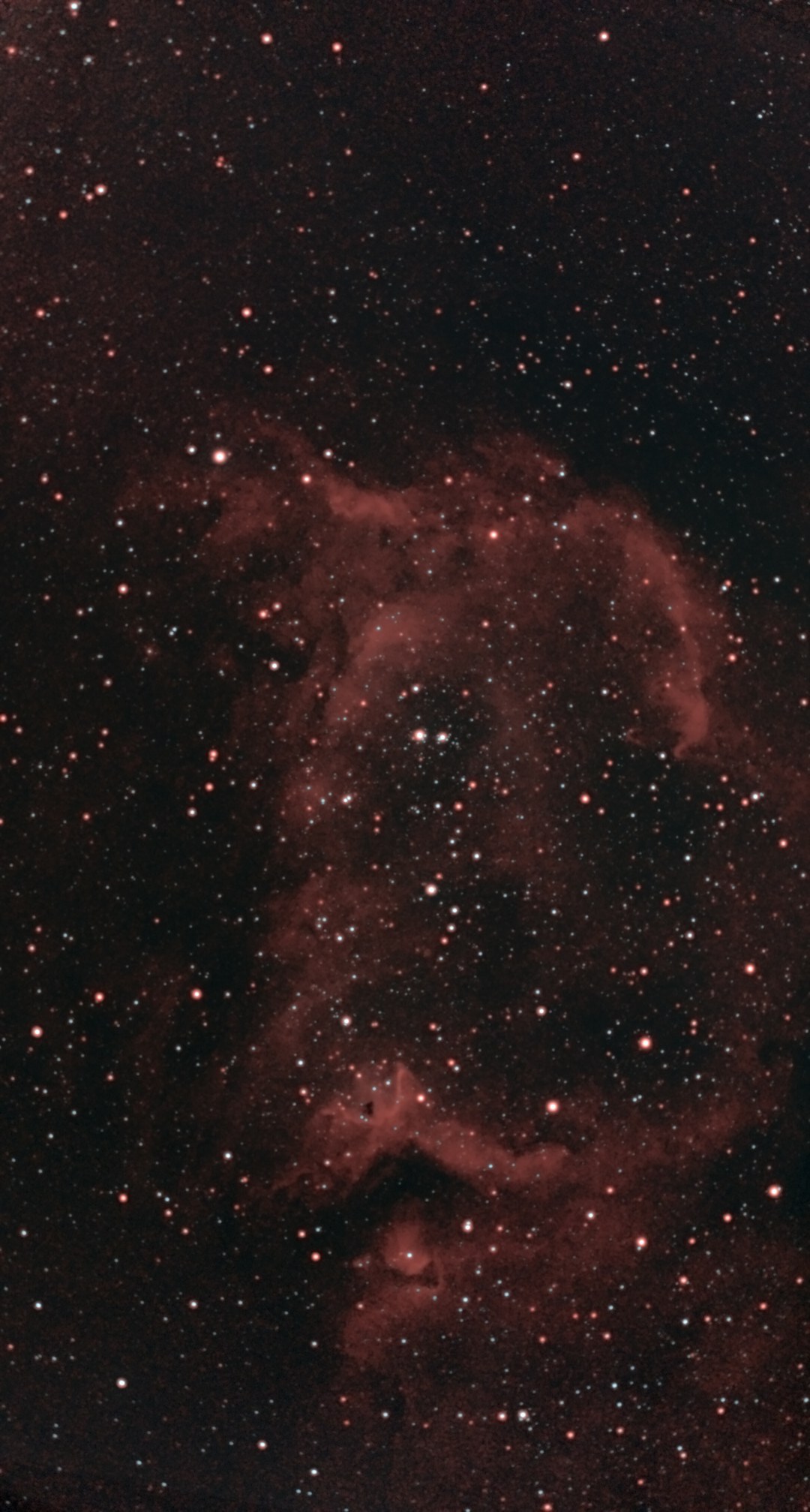
IC 1795 is a glowing cloud of hydrogen about 6,400 light-years away in Cassiopeia, on the western edge of the Heart Nebula. Radio astronomers call the whole region W3, and its distance is one of the best measured in this part of the galaxy, from the parallax of water and methanol masers deep inside it.
The fish shape is gas lit by hot young stars, cut across by a dark lane of dust in front of it. The bright knot just above the head, NGC 896, is the brightest part of the same cloud; William Herschel catalogued it in 1787.
W3 is the youngest part of the Heart & Soul complex. Its densest core, W3 Main, holds massive stars so young they are still wrapped in their birth cloud: nearly invisible to my camera, blazing in the infrared view below. Astronomers think the Heart’s expanding bubble squeezed this cloud into collapse, one generation of stars setting off the next.
The lesson
I almost left this one out. The Fishhead sits off the edge of the classic Heart & Soul framing, and it is small enough to treat as decoration.
But it is where the future of that whole complex is happening: the newest stars in the region, still forming, set off by the pressure of the generation before them.
Organizations work the same way. The established teams get the attention, while the next thing takes shape at the edge, under pressure, mostly out of view. Look at the edges.
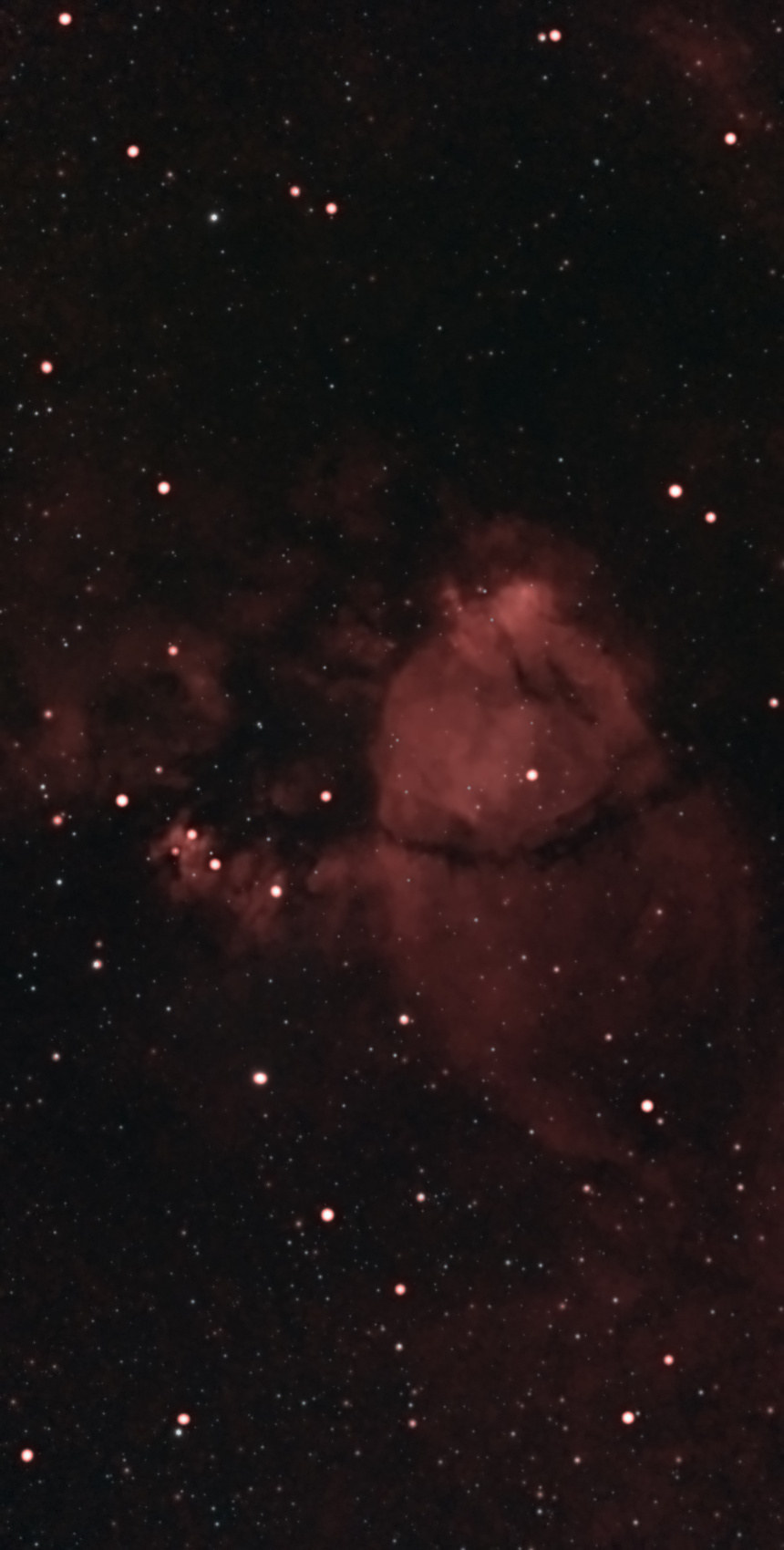
The same fish, in infrared — NASA’s WISE space telescope
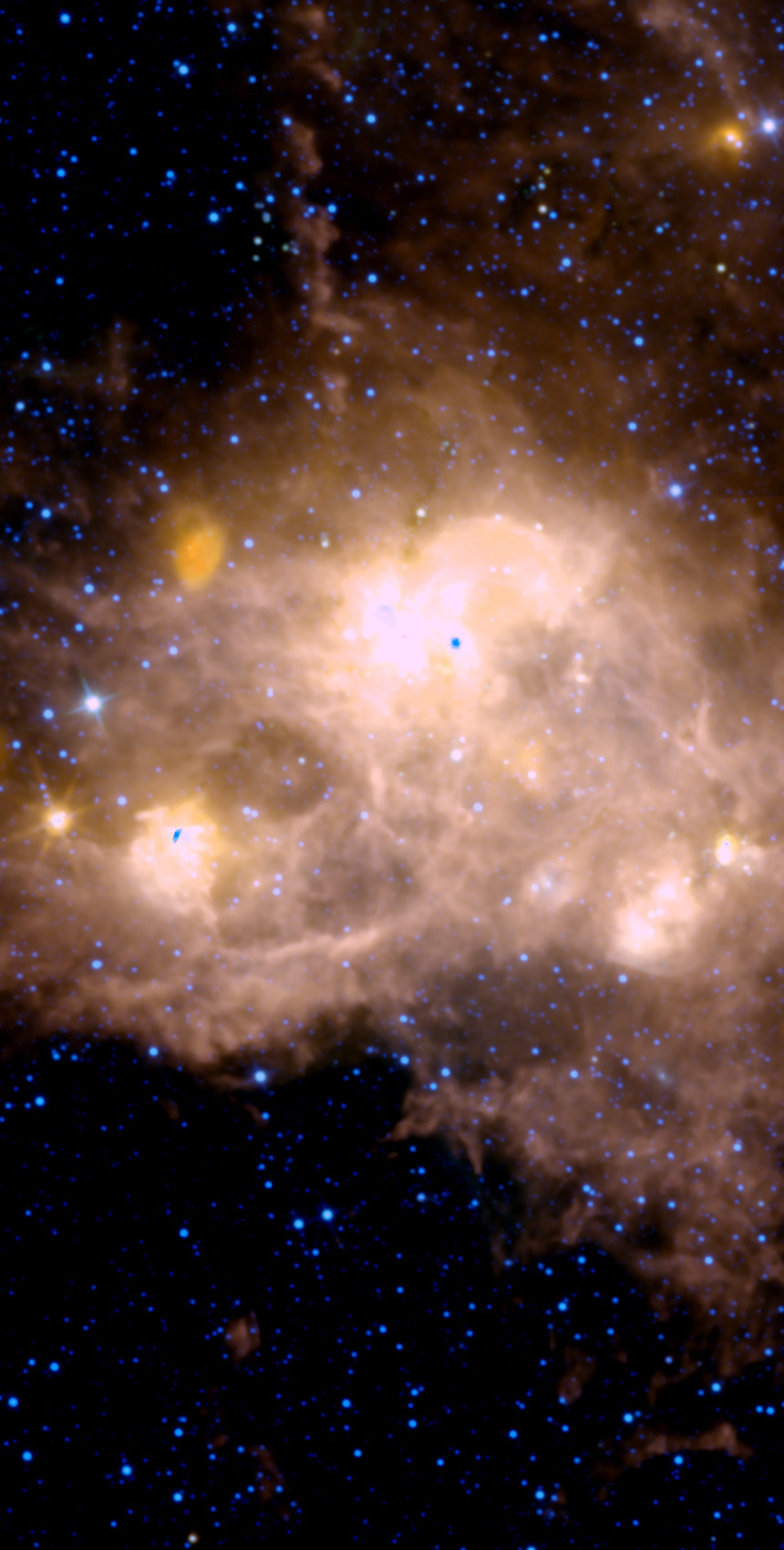
Image data: NASA/JPL-Caltech, WISE (ALLWISE atlas tiles), public archive via IRSA. Six-tile mosaic, reprocessed by Kyle Eberly / Sitreps; the backyard frame was plate-solved against the ESA Gaia catalog to place it.
- My telescope
- ZWO Seestar S50 — 50 mm lens, visible light, 4.8 hours
- This telescope
- WISE — a 40 cm space telescope above the atmosphere
- The light
- 3.4, 4.6 and 12 µm infrared — heat the atmosphere never lets through
- The data
- The same six ALLWISE atlas tiles behind the Heart’s infrared view, plate-solved against the Gaia star catalog so the infrared lands on my exact framing
A young star-forming region looks modest in visible light, because its newest stars are still hidden in dust. Heat gets out where light does not, so the infrared view is where W3 shows what it really is.
One photo. One lesson.
New entries land when the sky cooperates. Get them by email, plus the Sitreps jobs newsletter — no schedule, no spam. Unsubscribe from either one anytime.
Object data
- Catalog
- IC 1795 · NGC 896 · part of W3
- Constellation
- Cassiopeia
- Type
- Emission nebula and star-forming region
- Distance
- ~6,400 light-years
- Part of
- The Heart & Soul complex, on the Heart’s western edge
- Integration
- 1,730 × 10 s = 4.8 hours