
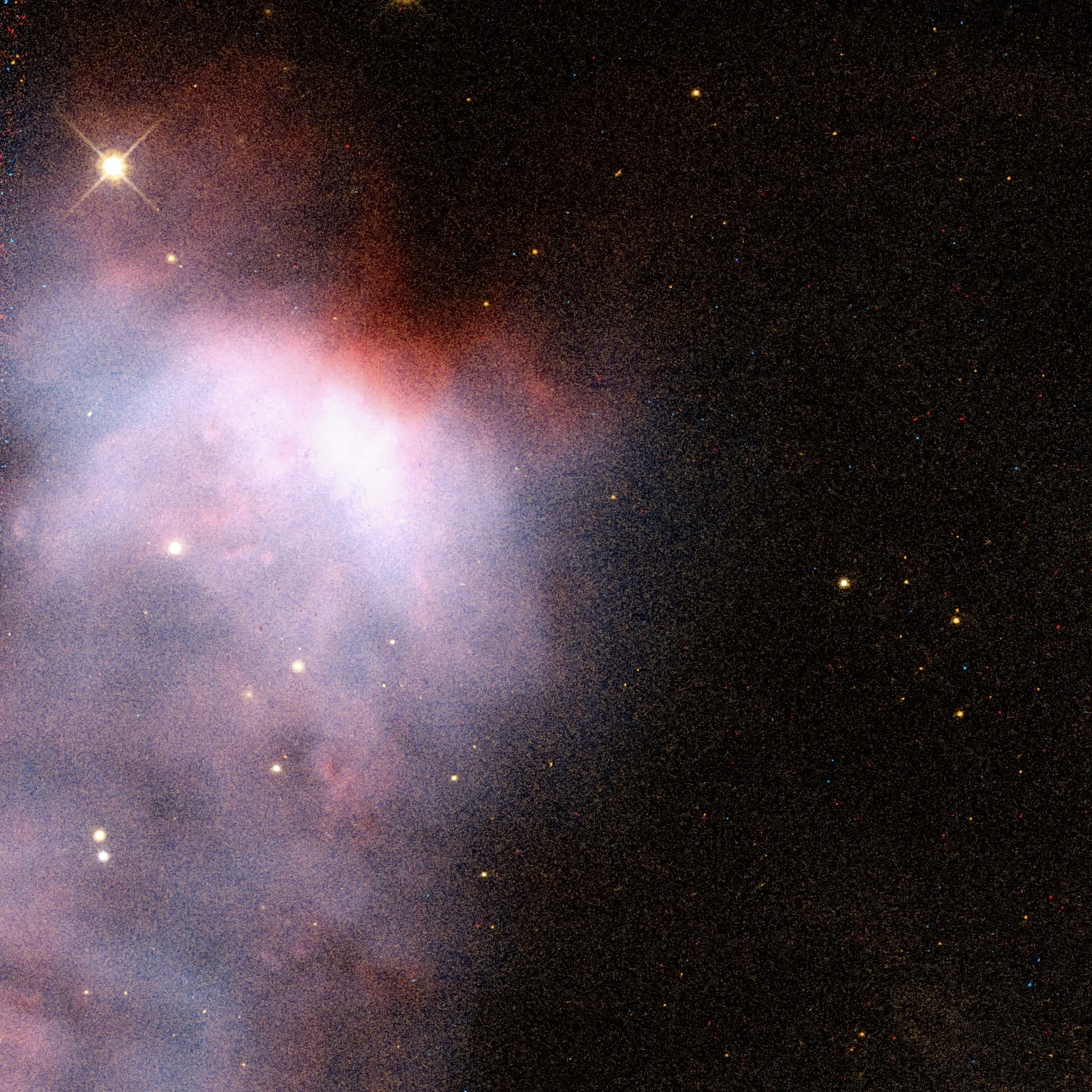
M76 — The Little Dumbbell, from Orbit
Hubble's 34th-anniversary target — reprocessed from the raw archive through my own pipeline
What you're looking at
M76 is a dying Sun-like star caught mid-transformation, about 2,500 light-years away in Perseus. The bright 'cork' — the bar my Seestar sees as a faint smudge — is a dense ring of expelled gas seen edge-on. The wings flowing away from it are older shells, blown off in earlier convulsions and now lit from inside by the exposed stellar core: a white dwarf running at roughly 120,000 degrees, one of the hottest stars known.
The red crown along the top is hydrogen fluorescing where the fastest wind slams into the oldest gas; the pearl-blue body is oxygen glowing in the hollow behind it. Reading the colors is reading the collision, layer by layer.
It's also a quiet catalog oddity: M76 was entered twice in the NGC — the two halves of the cork were catalogued as two separate objects, NGC 650 and 651, before anyone realized they were one thing seen edge-on.
The lesson
Look at the lower-left of this frame: the nebula's western wing runs past the edge, because Hubble's camera simply didn't point there. I could have cropped tighter and hidden that. The frame ends where the data ends, and the picture says so.
That's the discipline worth copying. Every briefing, every analysis, every plan has a frame edge — the line where your information stops and your guessing would begin. The amateur move is cropping so no one sees the edge. The professional move is showing exactly where it is.
Nobody distrusts a map for having a border. They distrust a map that pretends it doesn't.
Object data
- Catalog
- M76 · NGC 650 + 651 (catalogued twice — one object, edge-on)
- Constellation
- Perseus
- Type
- Planetary nebula (bipolar)
- Distance
- ~2,500 light-years
- Central star
- White dwarf · ~120,000 K — among the hottest stars known
- Telescope
- Hubble WFC3/UVIS · proposal 17398 (archival, 2024 anniversary)
- Filters → color
- F475W+[OIII] → B · broadband mid → G · F814W+Hα → R
- Companion entry
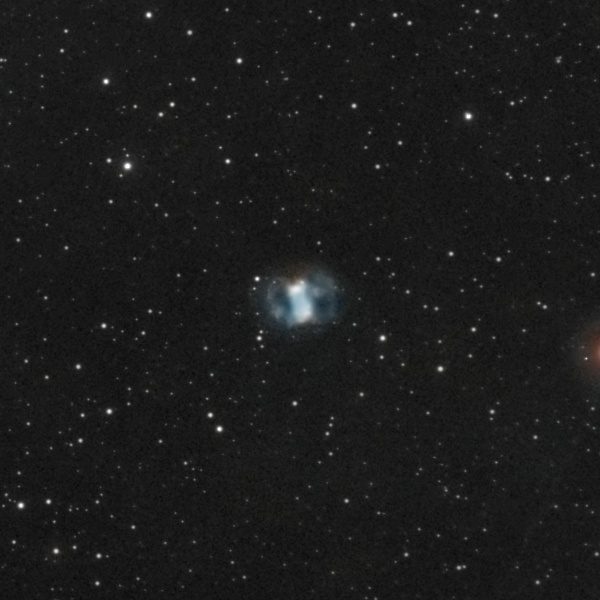
- /astronomy/m76-little-dumbbell — my own 89-minute Seestar capture
More from the journal
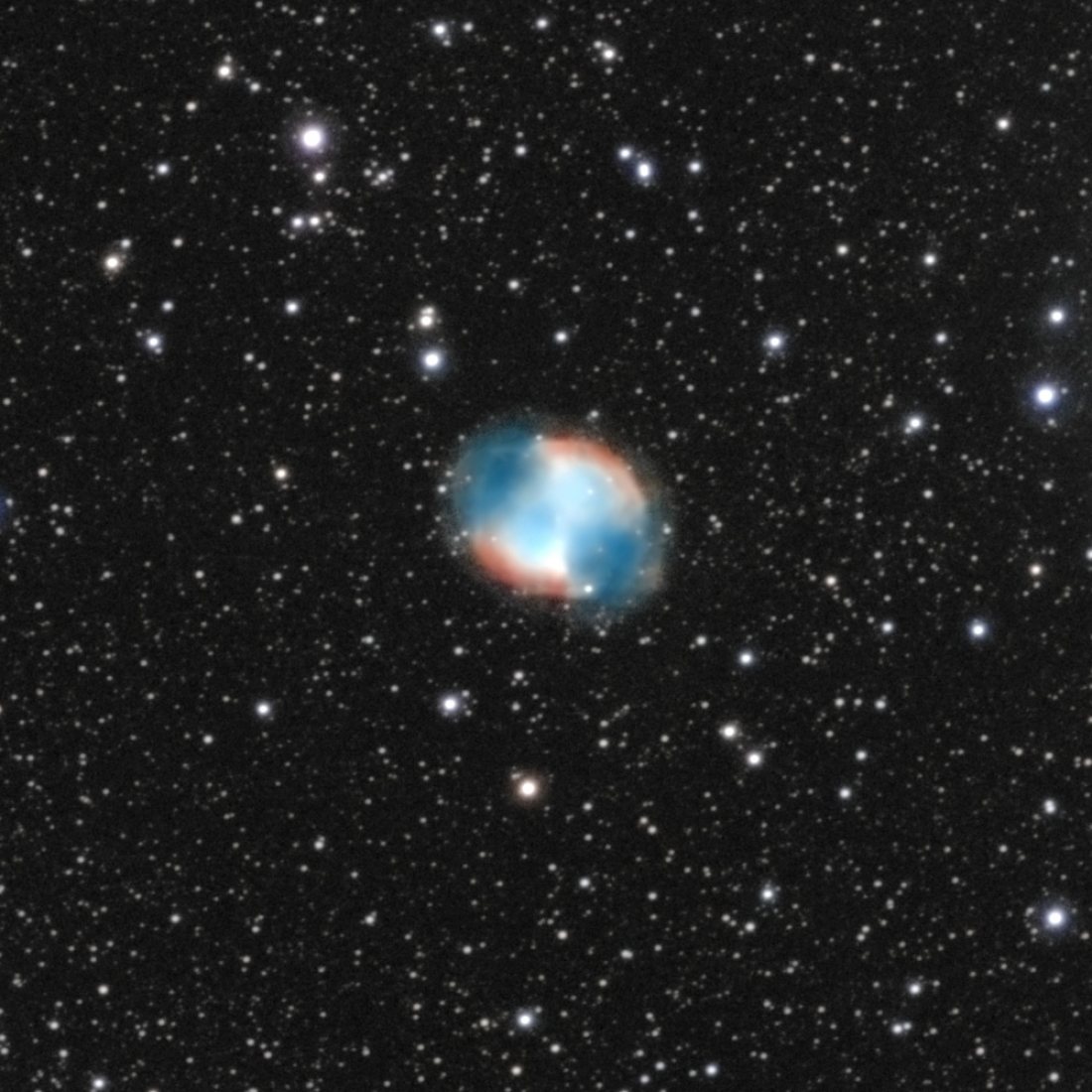
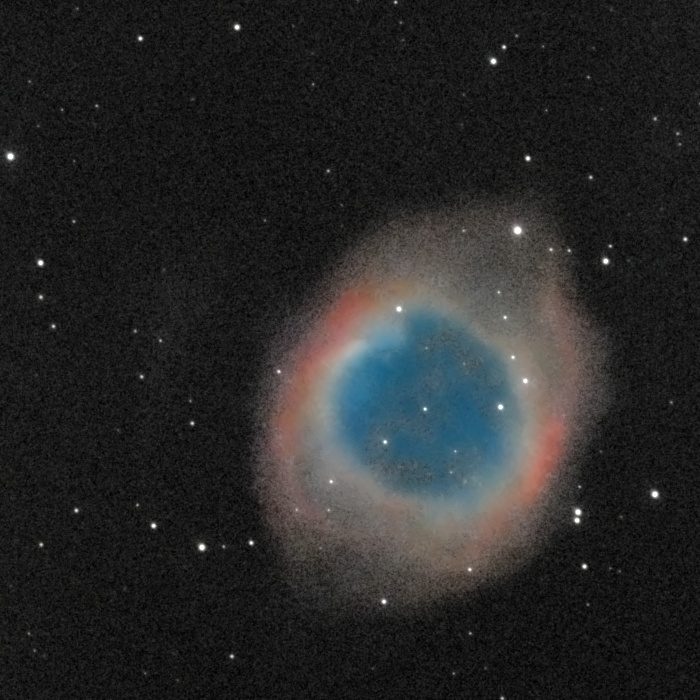
One photo. One lesson.
New entries land when the sky cooperates. Get them by email — no schedule, no spam, just what the telescope caught and what it taught.