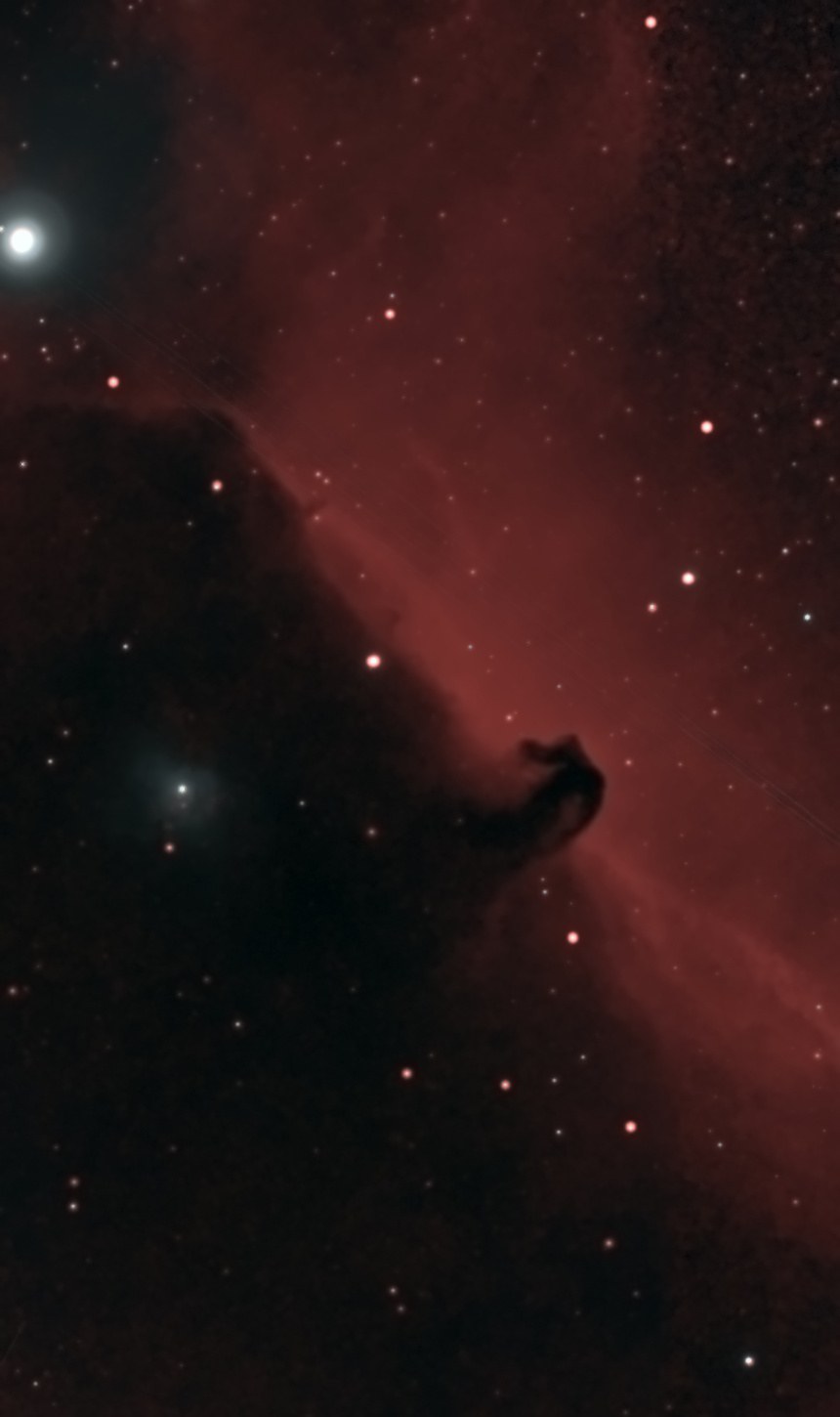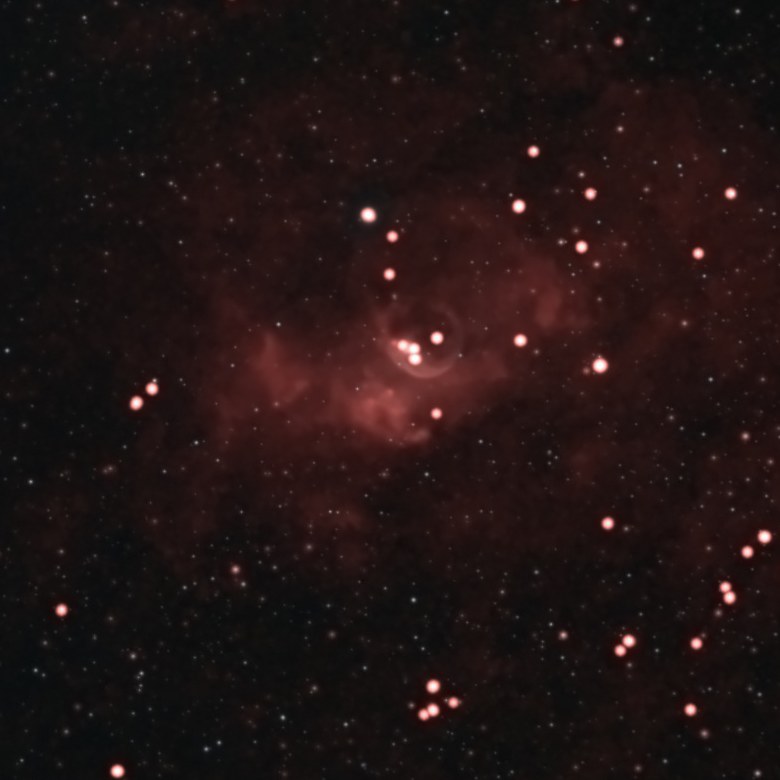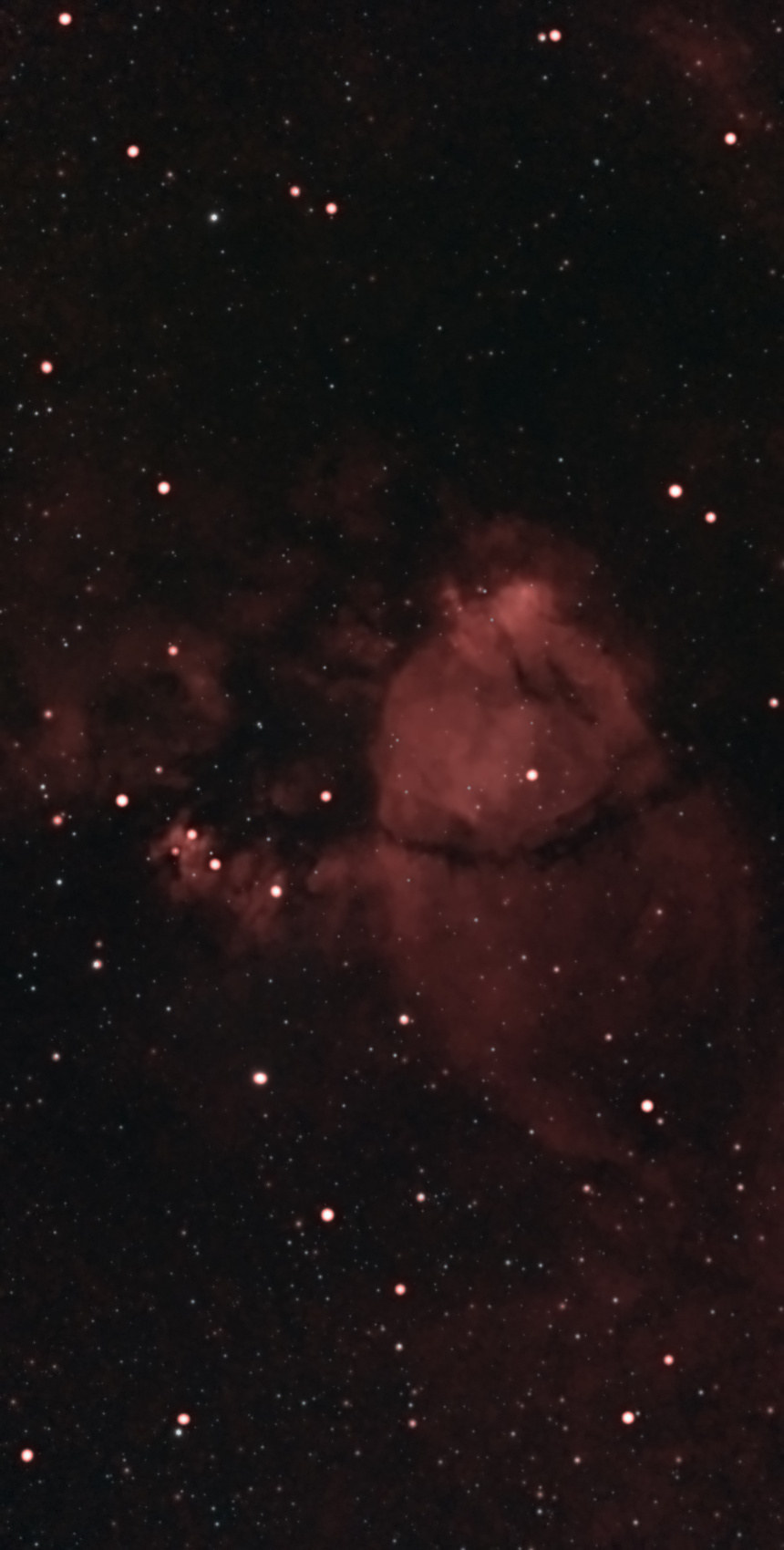
The Orion Nebula — Widefield
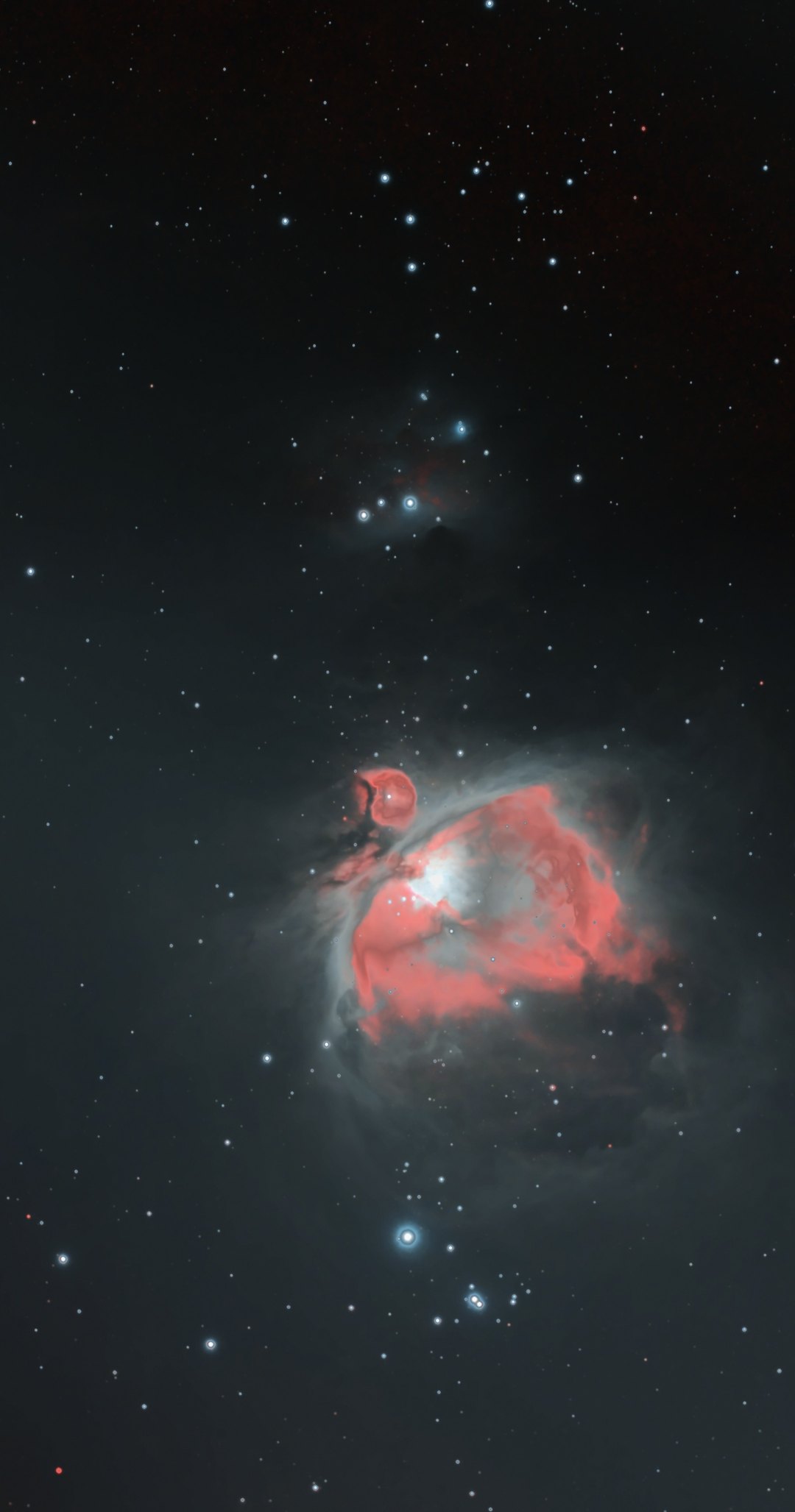
M42, M43 and the Running Man: the whole of Orion’s sword in one frame
 Eva (ZWO Seestar S50 Pro)
What you're looking at
To the naked eye, Orion’s sword is three fuzzy points of light hanging below the Belt. This frame holds all three: the star cluster NGC 1981 at the top, the Orion Nebula in the middle, and the bright star Iota Orionis at the bottom.
The Orion Nebula (M42) and its round companion M43 are the bright face of a much larger cloud, about 1,350 light-years away, where hundreds of stars are forming right now. Above them, the faint glow around a short row of stars is the Running Man Nebula (NGC 1977), gas and dust lit by hot young stars in the same complex.
The dark band between the Running Man and M42 is dust in front of the glow, not empty space. The close-up of M42 on this site shows the inner nebula in detail; this view shows where it sits in the sword.
The lesson
My first review scored this frame against the S50 close-up of M42 and called it the weaker picture: less detail in the core.
That was the wrong test. The close-up answers “what does the nebula look like?” This one answers “where does it sit?” Each instrument was built for a different question.
Before you judge a piece of work, check what it was built to do. A wide shot loses every contest scored for a close-up.
One photo. One lesson.
New entries land when the sky cooperates. Get them by email, plus the Sitreps jobs newsletter — no schedule, no spam. Unsubscribe from either one anytime.
Object data
- Objects
- M42 · M43 · NGC 1977 (Running Man) · NGC 1981 · Iota Orionis
- Constellation
- Orion
- Type
- Emission and reflection nebulae, open cluster
- Distance
- ~1,350 light-years
- Field
- About 1.2° × 2.3° of sky, north up
- Integration
- 188 × 30 s = 1.6 hours, dual-band, one session